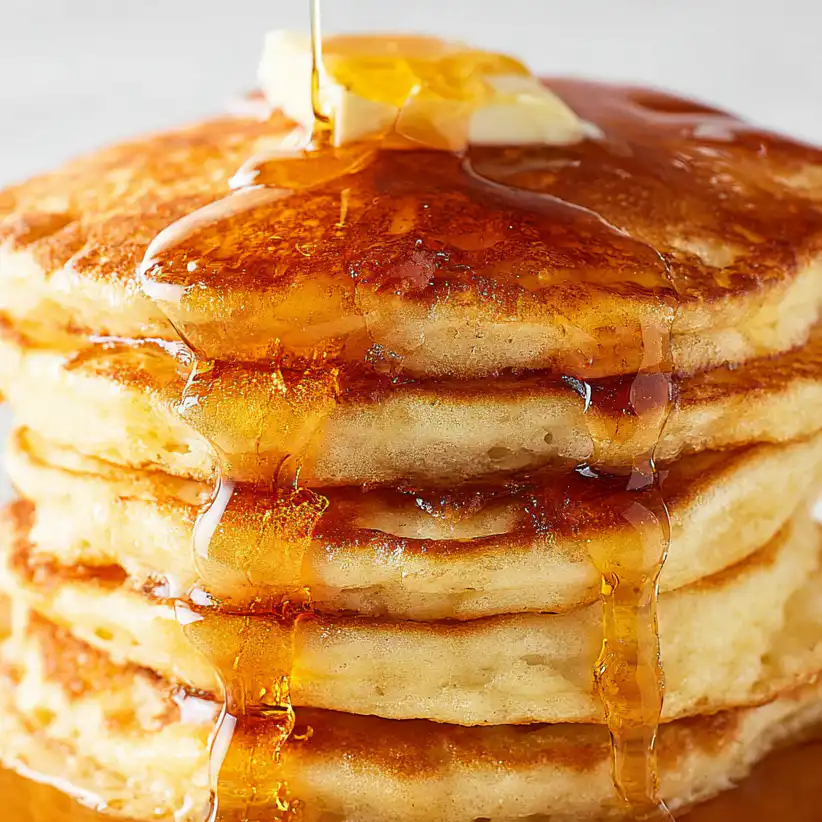
There is something inherently nostalgic about the smell of butter sizzling on a hot griddle and the sweet aroma of vanilla wafting through the kitchen on a Saturday morning. While store-bought mixes offer convenience, they often lack the soul, texture, and customizable flavor of a truly great homemade pancake. This recipe is designed to be your new “forever” breakfast staple. We aren’t just making breakfast; we’re creating a cloud-like experience that is thick, airy, and perfectly golden. Whether you’re feeding a crowd of hungry kids or enjoying a quiet morning for two, these pancakes deliver a restaurant-quality result with minimal effort and standard pantry ingredients. Say goodbye to flat, chewy discs and hello to the fluffiest stack you’ve ever served.
Why You’ll Love This Recipe
You’ll love this recipe because it strikes the perfect balance between simplicity and gourmet results. It uses basic staples like flour, milk, and eggs, yet the specific ratios ensure a lift that most recipes miss. The addition of vanilla extract and melted butter provides a depth of flavor that tastes premium, while the “volcano” mixing method prevents the dreaded over-mixing that leads to tough pancakes. Furthermore, this recipe is incredibly versatile—it handles chocolate chips, blueberries, or even savory additions with ease. It’s a fail-proof formula that works on electric griddles and cast-iron skillets alike, making you the hero of the breakfast table every single time.
What Is a Homemade Pancake?
A homemade pancake, specifically the American style featured here, is a chemically leavened flat cake made from a starch-based batter. Unlike crepes, which are thin and flexible, or galettes, which are often savory and buckwheat-based, American pancakes rely on a leavening agent (in this case, baking powder) to create a thick, airy structure. When the batter hits the heat, the baking powder releases carbon dioxide, which gets trapped by the gluten in the flour, causing the pancake to “rise” on the griddle. The result is a soft, cake-like interior with a slightly crisp, buttery exterior—the quintessential comfort food that has been a centerpiece of American breakfast culture for over a century.
Ingredients Overview
To achieve the perfect pancake, every ingredient plays a critical role. Understanding them is the first step toward pancake mastery:
- All-Purpose Flour (1 ½ cups): This provides the structural foundation. All-purpose flour has just enough protein to create a soft crumb without becoming bread-like.
- Aluminum-Free Baking Powder (2 ½ teaspoons): The magic ingredient. Using an aluminum-free variety prevents that “metallic” aftertaste often found in cheaper brands. It provides the lift and airiness.
- Salt (½ teaspoon): Salt is a flavor enhancer; it balances the sugar and makes the vanilla and butter notes pop.
- Sugar (2 tablespoons): Beyond sweetness, sugar aids in caramelization (browning), giving your pancakes those beautiful golden-brown edges.
- Milk (1 ¼ cups): This provides moisture and richness. You can use whole milk for a decadent flavor or 2% for a lighter feel.
- Egg (1 large): The egg acts as a binder and adds fat, which contributes to the tender “melt-in-your-mouth” texture.
- Melted Butter (3 tablespoons): Fat is flavor. Using melted butter inside the batter ensures a moist interior, while using it on the griddle creates a delicious crust.
- Vanilla Extract (2 teaspoons): A generous amount of high-quality vanilla elevates these from “plain” to “professional.”
Ingredient Substitutions & Tips
If you find yourself missing an ingredient, don’t worry! For a dairy-free version, substitute the milk with almond or oat milk and use melted coconut oil or vegan butter. If you want Buttermilk Pancakes, replace the regular milk with buttermilk and reduce the baking powder to 2 teaspoons while adding ½ teaspoon of baking soda. For a Gluten-Free option, a 1:1 gluten-free flour blend works remarkably well here, though you may need an extra tablespoon of milk as GF flours tend to be more absorbent. Lastly, if you run out of sugar, honey or maple syrup can be whisked into the liquid ingredients as a direct replacement.
Step-by-Step Instructions
- Prep the Dry Base: In a large mixing bowl, whisk together your flour, baking powder, salt, and sugar. It is important to whisk these thoroughly to ensure the baking powder is evenly distributed; otherwise, you may end up with uneven rising.
- Create the “Volcano”: Make a well in the center of your dry ingredients. This “volcano” method allows you to mix the wet ingredients together in the center before slowly incorporating the flour, which is the secret to a lump-free yet tender batter.
- Incorporate the Liquids: Pour your milk, egg, melted butter, and vanilla into the well. Use a fork to gently break the yolk and lightly whisk the liquids.
- The Gentle Mix: Slowly draw the flour from the edges of the bowl into the liquid center. Mix until the flour just disappears. Stop immediately. A few small lumps are perfectly fine and will disappear during cooking. Over-mixing develops gluten, which makes pancakes chewy rather than fluffy.
- Heat the Surface: Set your griddle to medium (about 325°F-350°F). Test the heat by dropping a tiny bit of water on the pan; if it dances and sizzles, you’re ready. Grease lightly with butter.
- The Pour: Use a ¼ cup measuring cup to pour batter onto the griddle. Since this batter is thick, use the back of the cup to gently spread it into a circle.
- Watch for Bubbles: Cook for about 2 minutes. Wait until you see bubbles forming on the surface and the edges look set and matte.
- The Flip: Slide a thin spatula underneath and flip in one confident motion. Cook for another 60-90 seconds until golden. Serve warm!
Expert Baking Tips
The biggest mistake people make is pressing down on the pancake with the spatula after flipping. It’s a common habit, but it’s the enemy of fluffiness! Pressing squeezes out the air pockets you just worked so hard to create. Secondly, room temperature ingredients are your friend. If you pour melted butter into ice-cold milk, the butter will solidify into small chunks. While it still tastes good, the texture is better if the milk and egg are slightly warmed or at room temperature. Finally, let the batter rest for 5 minutes before cooking. This allows the flour to fully hydrate and the leavening agents to begin their work.
The Science of the Perfect Rise
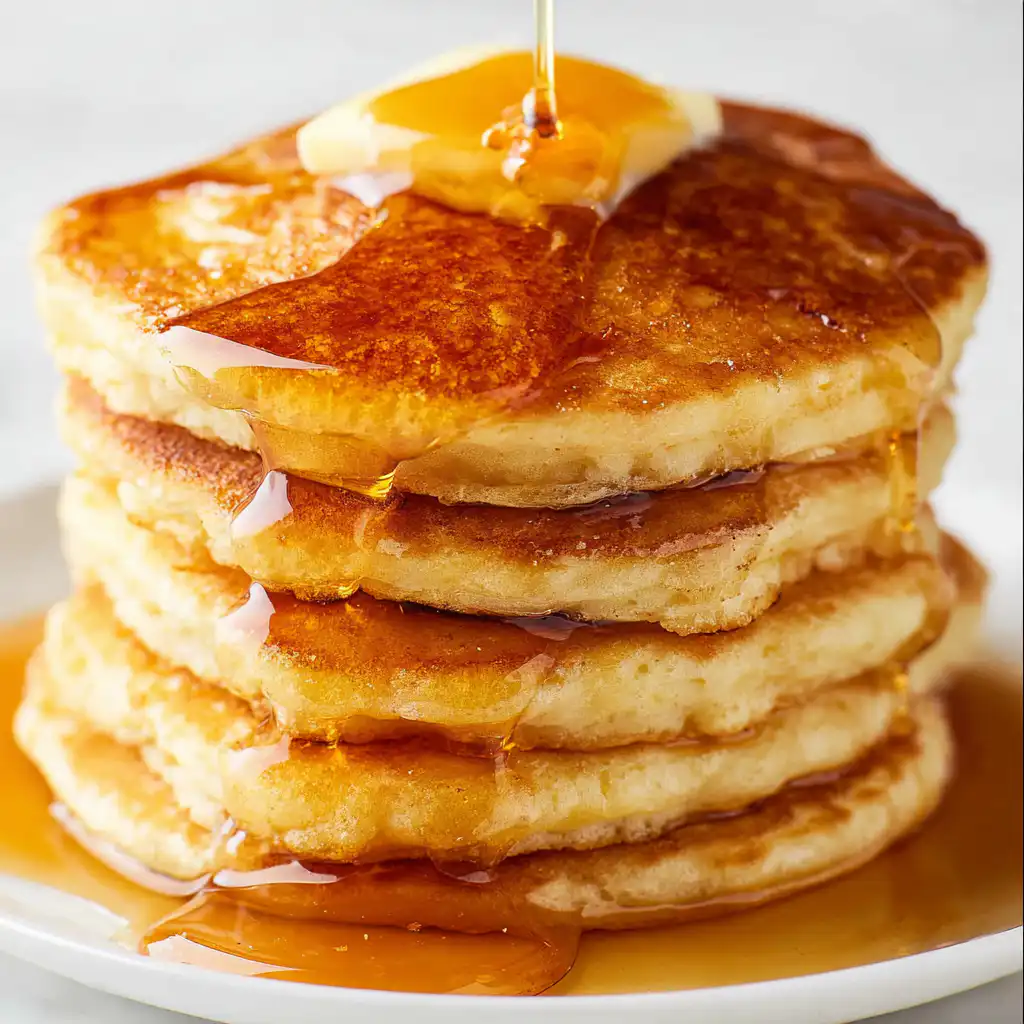
Why do these pancakes get so tall? It’s all about the interaction between the leavening agent and the heat. Baking powder is “double-acting,” meaning it reacts once when it hits the liquid and again when it hits the heat of the pan. Because we use a significant amount (2 ½ teaspoons), the CO2 production is vigorous. By not over-mixing, we keep the “web” of gluten flexible enough to expand but strong enough to hold those gas bubbles. This creates the honeycomb-like structure you see when you cut into a perfect pancake. Using aluminum-free powder ensures that even with this high amount, the flavor remains clean and sweet.
Serving Suggestions
Classic maple syrup and a pat of salted butter are hard to beat, but don’t stop there! Try a dollop of Greek yogurt and a drizzle of honey for a tangy twist, or fresh macerated strawberries and whipped cream for a dessert-style breakfast. For a savory-sweet combo, serve your stack with crispy bacon or a fried egg on top. If you’re feeling indulgent, a spread of peanut butter and sliced bananas adds protein and extra richness.
Storage & Make-Ahead Tips
Leftover pancakes are a gift to your future self. Let them cool completely on a wire rack to prevent sogginess, then stack them with parchment paper in between and store in a freezer-safe bag. They stay fresh for up to 3 months. To reheat, simply pop them in the toaster on a medium setting—this restores the slightly crisp exterior while warming the middle. You can also microwave them for 30 seconds for a softer texture.
FAQs
Q: Why are my pancakes flat?
A: Usually, this is due to expired baking powder. Baking powder loses its potency after 6–12 months. To test yours, drop a teaspoon into hot water; if it bubbles vigorously, it’s still good. If not, it’s time for a new jar!
Q: Can I make the batter the night before?
A: It is not recommended. The baking powder begins reacting as soon as it touches the milk. If the batter sits overnight, it will lose its “oomph,” resulting in much flatter pancakes the next morning.
Q: Why is the first pancake always bad?
A: The “first pancake syndrome” is usually a heat issue. The pan often hasn’t reached an even temperature or the butter hasn’t distributed correctly. Use the first one as a test for your griddle temperature.
Q: Can I use whole wheat flour?
A: Yes, but substitute only half of the all-purpose flour for whole wheat to maintain a light texture. You may also need 1-2 extra tablespoons of milk.
Making pancakes from scratch is a simple culinary joy that transforms a basic meal into a cherished memory. With these tips and the “volcano” mixing technique, you are well on your way to becoming the pancake master of your household. Remember: don’t over-mix, watch for those bubbles, and never press down with the spatula! Once you taste the difference that fresh ingredients and the right technique make, you’ll never go back to the box again. Happy flipping!
PrintFluffy Homemade Pancakes
Thick, fluffy, and golden-brown pancakes made from scratch with simple pantry staples. These are the ultimate weekend comfort food, boasting a soft interior and perfectly crisped edges.
- Prep Time: 10 minutes
- Cook Time: 15 minutes
- Total Time: 25 minutes
- Yield: 8 pancakes
- Cuisine: American
Ingredients
1 ½ cups all-purpose flour
2 ½ teaspoons baking powder, aluminum-free
½ teaspoon salt
2 tablespoons sugar
1 ¼ cups milk, any
1 egg
3 tablespoons butter, melted
2 teaspoons vanilla extract
Instructions
In a large bowl, combine the flour, baking powder, salt, and sugar.
Make a well in the middle and pour in the milk, egg, melted butter, and vanilla extract.
Break up the egg with a fork, then mix with the liquids before combining with the flour. Mix until just combined and mostly smooth; do not overmix.
Heat a non-stick griddle over medium heat (300-350F) and grease with butter or spray.
Pour ¼ cup of batter onto the surface. Use a spoon to shape into circles if needed.
Cook for 2 minutes until bubbles form and edges look defined.
Flip and cook the second side for 1-2 minutes. Do not press down on the pancake.
Keep warm in a 200F oven or serve immediately with your favorite toppings.
Notes
• Add-ins: Fold in 1 cup of blueberries or ½ cup of chocolate chips after mixing.
• Consistency: If too thick, add 2 tbsp milk. If too thin, add 1-2 tbsp flour.
• Flat Pancakes: This usually means your baking powder is expired. Always use fresh leavening.
• Heat Tip: If the butter browns instantly, your pan is too hot.