There is something truly magical about the arrival of peach season. As the sun lingers longer in the sky and the air turns sweet with the scent of ripening fruit, my kitchen becomes a sanctuary for stone fruit recipes. These Peach Scones with Honey Vanilla Glaze are the culmination of years of testing the perfect pastry-to-fruit ratio. Unlike dry, crumbly scones that require a gallon of tea to swallow, these are remarkably tender, moist, and bursting with the nectar-like sweetness of fresh peaches. The addition of a floral honey-vanilla drizzle elevates them from a simple breakfast item to a sophisticated brunch centerpiece. Whether you are hosting a garden party or simply looking for a way to use up a farmers’ market haul, these scones offer a bakery-quality experience right in your own home.
Why You’ll Love This Recipe
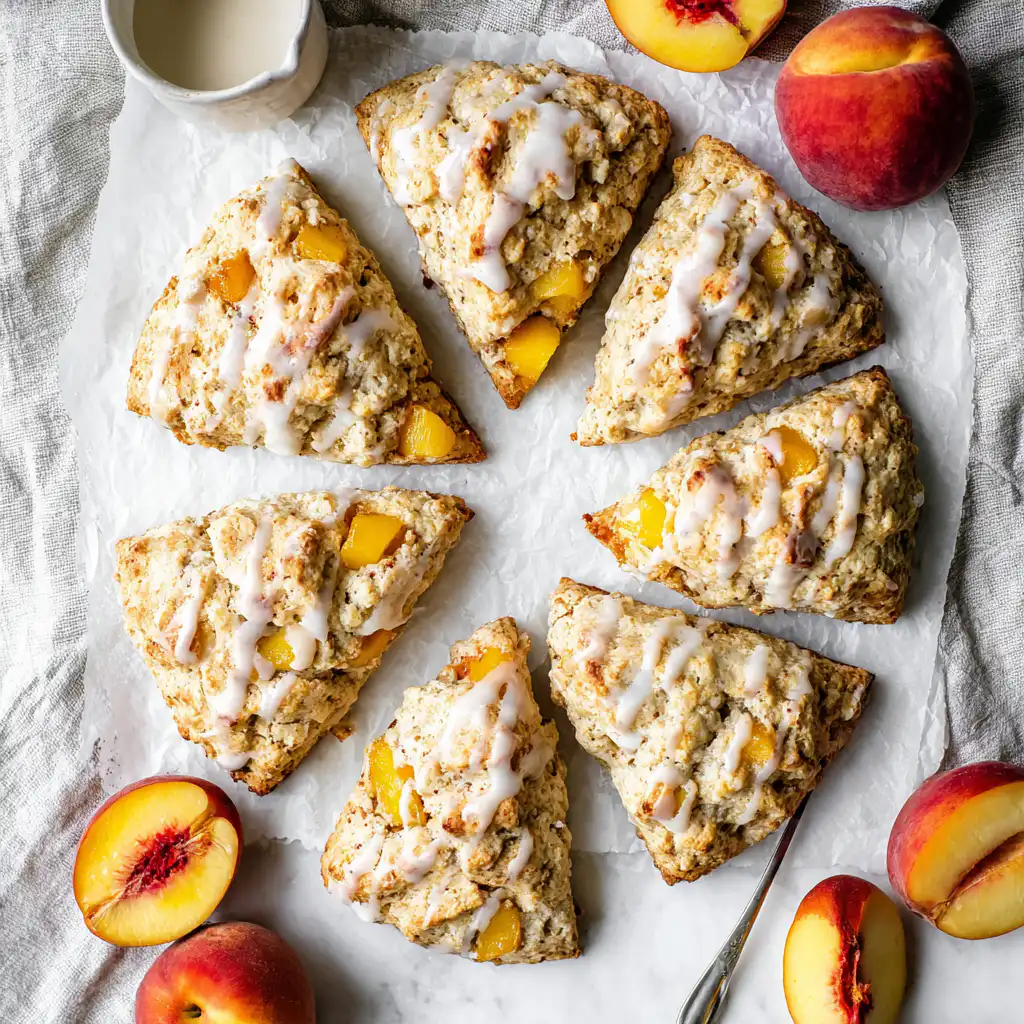
You will fall in love with these scones because they strike the perfect balance between a crisp, golden exterior and a soft, pillowy interior. The fresh peaches provide little pockets of moisture and bright acidity that cut through the richness of the buttery dough. Unlike traditional British scones, which are often served with clotted cream, these American-style scones are flavorful enough to stand alone, especially once they are draped in that luscious honey vanilla glaze. Furthermore, this recipe utilizes a special freezing technique that ensures a towering rise and distinct, flaky layers every single time. It is a foolproof method for both novice bakers and seasoned pros looking for consistent, professional results.
What Is a Peach Scone?
A peach scone is a type of “quick bread” or pastry characterized by its high fat-to-flour ratio and the use of chemical leaveners like baking powder. While British scones are usually round and more neutral in flavor, this American-style peach scone is richer, often triangular, and incorporates fruit directly into the dough. The peaches are peeled and diced, then folded gently into a mixture of flour, sugar, and cold butter. The result is a scone that feels more like a cross between a biscuit and a muffin—sturdy enough to hold in your hand but tender enough to melt in your mouth. The honey vanilla glaze adds a final layer of sweetness that complements the natural sugars in the fruit.
You WILL NEED
- All-Purpose Flour: This provides the necessary structure. Ensure you measure using the “spoon and level” method to avoid packing too much flour into the cup.
- Cold Unsalted Butter: This is the secret to flakiness. The butter must be ice-cold so that it releases steam during baking, creating those coveted layers.
- Fresh Peaches: Choose peaches that are fragrant and slightly soft but not mushy. Peeling them ensures a smoother texture in every bite.
- Heavy Cream: This adds fat and moisture, contributing to the “short” crumb of the pastry.
- Honey and Pure Vanilla: For the glaze, use a high-quality floral honey (like clover or wildflower) and real vanilla extract to provide a deep, aromatic finish that mimics the scent of a summer orchard.
- Baking Powder: A full tablespoon ensures a significant lift, preventing the scones from becoming dense.
Ingredient Substitutions & Tips
If you find yourself without fresh peaches, you can easily use frozen peaches. Just be sure to dice them while still frozen and do not thaw them, as the extra moisture can make the dough too wet. For a dairy-free version, you can substitute the heavy cream with full-fat canned coconut milk and use a vegan butter stick, though the texture will be slightly different. If you want to add a bit of crunch, consider sprinkling some coarse turbinado sugar on top of the cream-brushed scones before they head into the oven. For a gluten-free option, a high-quality 1:1 gluten-free baking flour works well, though you may need to add an extra tablespoon of cream.
Step-by-Step Instructions
- Prep the Foundation: Start by lining your baking sheet. This prevents the bottoms of the scones from browning too quickly and makes cleanup a breeze.
- Mix Dry Ingredients: In a large bowl, whisk your flour, sugar, baking powder, cinnamon, and salt. The cinnamon adds a subtle warmth that enhances the peach flavor.
- The Butter Integration: Use a pastry blender to cut the cold butter into the flour. You want pieces the size of peas. If you don’t have a blender, two knives or your fingertips work—just move fast so the butter doesn’t melt.
- Incorporate Liquids: Whisk the cream and vanilla together, then pour into the dry mix. Stir until just combined. Fold in the peaches gently; you don’t want to crush the fruit or overwork the gluten.
- Shape and Cut: Move the dough to a floured surface. Knead it only 3-4 times. Pat it into a circle about 1 inch thick. Slice into 8 even wedges using a sharp knife or bench scraper.
- The Chill Factor: Place the scones in the freezer for 15-20 minutes. This re-chills the butter and relaxes the gluten, leading to a much better rise.
- Bake to Perfection: Brush with a little extra cream for a golden shine. Bake at 400°F until the edges are firm and the tops are golden brown.
- Glaze and Glow: Once cooled, whisk your glaze ingredients until smooth and drizzle generously over the scones.
Expert Baking Tips
The single most important tip for scone success is temperature control. Always keep your butter and cream in the refrigerator until the very moment you need them. If your kitchen is particularly warm, you can even chill your flour and bowl before starting. Another tip is to avoid over-mixing. A few streaks of flour in the dough are better than a perfectly smooth dough, which would result in a tough, rubbery scone. When cutting the wedges, push the knife straight down rather than sawing back and forth; this keeps the edges “open,” allowing the steam to lift the dough layers upward during the bake.
The Science of the “Freezer Flash”
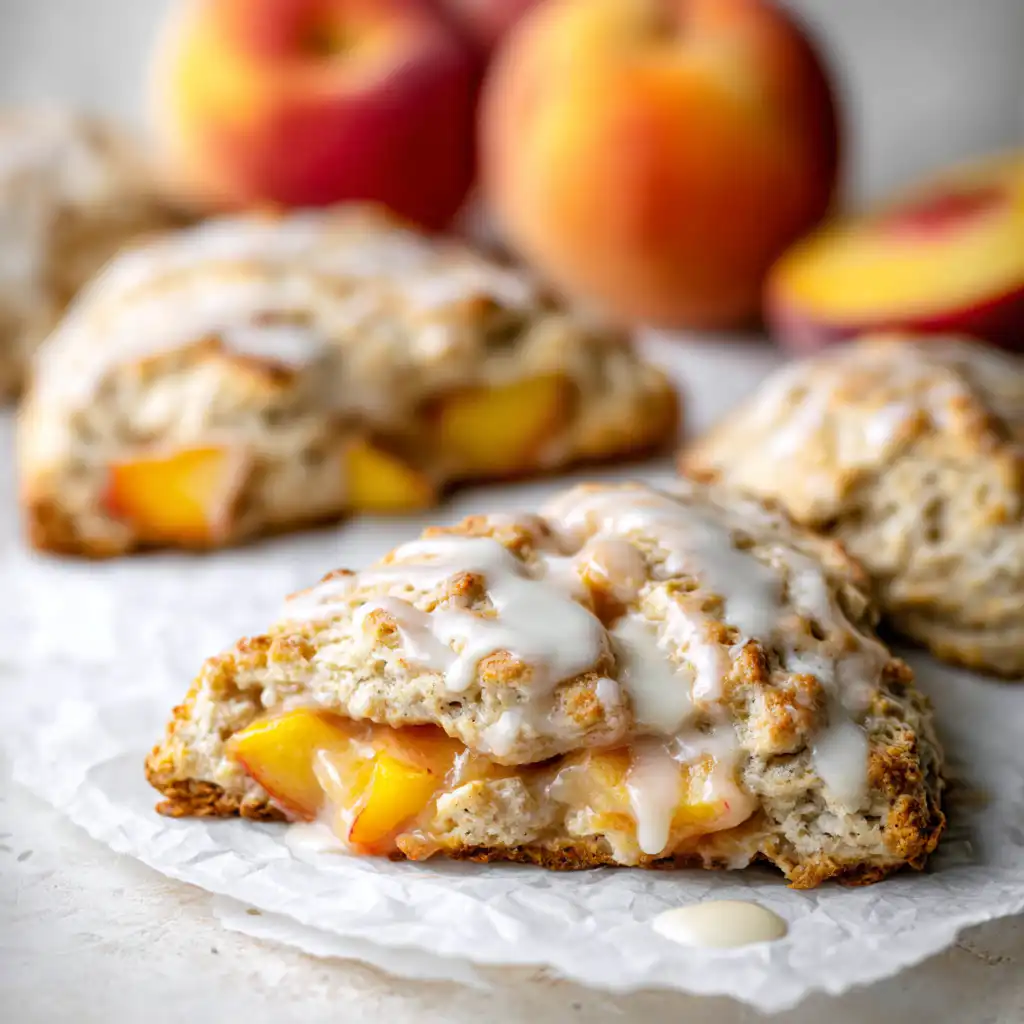
Why do we freeze the scones for 15 minutes before baking? It’s not just an extra step; it’s a scientific necessity for the best texture. When the cold butter hits the high heat of a 400°F oven, the water inside the butter evaporates instantly, creating pockets of steam. This steam pushes the dough up, creating a flaky, light texture. If the butter is even slightly room temperature, it will simply melt into the flour, resulting in a flat, greasy scone. The freezer also helps the scones maintain their sharp triangular shape, preventing them from spreading too much on the baking sheet.
Serving Suggestions
These scones are best served slightly warm, about 10 minutes after glazing. They pair beautifully with a cup of Earl Grey tea or a robust cold-brew coffee. For a full brunch spread, serve them alongside a savory quiche or a fresh arugula salad with a light lemon vinaigrette. If you want to go the extra mile, serve them with a side of whipped mascarpone cheese or a small jar of peach preserves to double down on the fruit flavor.
Storage & Make-Ahead Tips
Scones are best enjoyed the day they are made. However, you can store leftovers in an airtight container at room temperature for up to 2 days. To refresh them, pop them in a 350°F oven for 5 minutes. You can also freeze the unbaked scone wedges for up to 3 months. When ready to eat, simply bake them straight from the freezer, adding 2–3 minutes to the total baking time for a fresh-baked breakfast on demand.
FAQs
Can I use canned peaches?
While fresh or frozen are preferred, you can use canned peaches if they are well-drained and patted dry with a paper towel. However, the texture will be significantly softer.
Why didn’t my scones rise?
The most common reasons are expired baking powder or using butter that was too warm. Ensure your leavener is fresh and your butter is ice-cold.
Can I make these mini scones?
Absolutely! Divide the dough into two smaller circles and cut each into 8 wedges for 16 mini scones. Reduce the baking time to about 12-15 minutes.
How do I prevent the bottoms from burning?
Using a Silpat mat or a double layer of parchment paper helps insulate the bottom. Also, ensure your oven rack is in the center position.
Is the honey glaze necessary?
While the scones are delicious plain, the honey glaze provides a necessary hit of sweetness that balances the slightly salty, buttery dough
Making Peach Scones with Honey Vanilla Glaze is a rewarding way to celebrate the fleeting flavors of summer. There is a deep satisfaction in taking simple ingredients—flour, butter, and fruit—and transforming them into something so elegant and delicious. These scones are a testament to the fact that with a few professional techniques, like chilling your dough and handling it with care, anyone can create bakery-standard pastries at home. Happy baking!
PrintPeach Scones with Honey Vanilla Glaze

Fluffy, buttery scones dotted with fresh peaches and finished with a sweet honey vanilla glaze. These homemade scones are going to become your new favorite breakfast treat.
- Prep Time: 30 minutes
- Cook Time: 18 minutes
- Total Time: 48 minutes
- Yield: 8 scones
- Cuisine: American
Ingredients
All-purpose flour – 2 cups
Granulated sugar – 3 tablespoons
Baking powder – 1 tablespoon
Ground cinnamon – 1/2 teaspoon
Salt – 1/2 teaspoon
Cold unsalted butter – 6 tablespoons (cubed)
Heavy cream – 1 cup (plus 1 tbsp for brushing)
Pure vanilla extract – 1/2 teaspoon
Fresh peeled peaches – 1 cup (diced)
Confectioners’ sugar – 1 cup
Honey – 1 tablespoon
Pure vanilla extract – 1/2 teaspoon (for glaze)
Milk – 2 tablespoons
Instructions
Preheat oven to 400°F and line a baking sheet with parchment paper.
Whisk flour, sugar, baking powder, cinnamon, and salt in a large bowl.
Cut cold butter into the flour using a pastry blender until coarse crumbs form.
Whisk cream and vanilla; stir into flour mixture. Fold in peaches.
Knead dough gently on a floured surface. Shape into a 1-inch thick disc.
Cut into 8 wedges and place on the baking sheet.
Freeze for 15-20 minutes to ensure a better rise.
Brush with cream and bake for 18-23 minutes until golden brown.
Whisk glaze ingredients (sugar, honey, vanilla, milk) until smooth.
Drizzle over cooled scones and serve.
Notes
• Use very cold butter for the flakiest layers.
• Don’t overmix the dough or the scones will be tough.
• You can substitute frozen peaches; do not thaw them before adding to the dough.