When it comes to spring celebrations, nothing beats a dessert that combines the nostalgic comfort of a classic chocolate chip cookie with the celebratory flair of a decorated cake. This Easter Chocolate Cookie Cake is the ultimate crowd-pleaser—thick, fudgy, and bursting with the colorful crunch of Mini Eggs and decadent chocolate chunks. Unlike traditional cakes that can be finicky or dry, this giant cookie relies on a high moisture content and a secret ingredient to ensure every slice is perfectly soft. Whether you are hosting a family brunch or looking for a way to use up your holiday candy haul, this recipe is designed for maximum impact with minimal effort. It is a mobile-friendly, beginner-approved bake that looks like it came straight from a professional bakery window.
Why You’ll Love This Recipe
You will fall in love with this Easter Cookie Cake because it strikes the perfect balance between texture and flavor. First, the texture is “bakery-style”—dense and chewy in the middle with slightly crisp, golden edges. Second, it is incredibly versatile; you can swap the Easter chocolates for any seasonal candy throughout the year. The addition of cornflour (cornstarch) ensures a tender crumb that stays soft for days, unlike standard cookies that can harden quickly. Finally, the homemade vanilla buttercream adds a touch of indulgence, making it feel like a true centerpiece. It’s a “one-bowl” style dough that requires no chilling, meaning you can go from craving to eating in under an hour.
What Is an Easter Chocolate Cookie Cake?
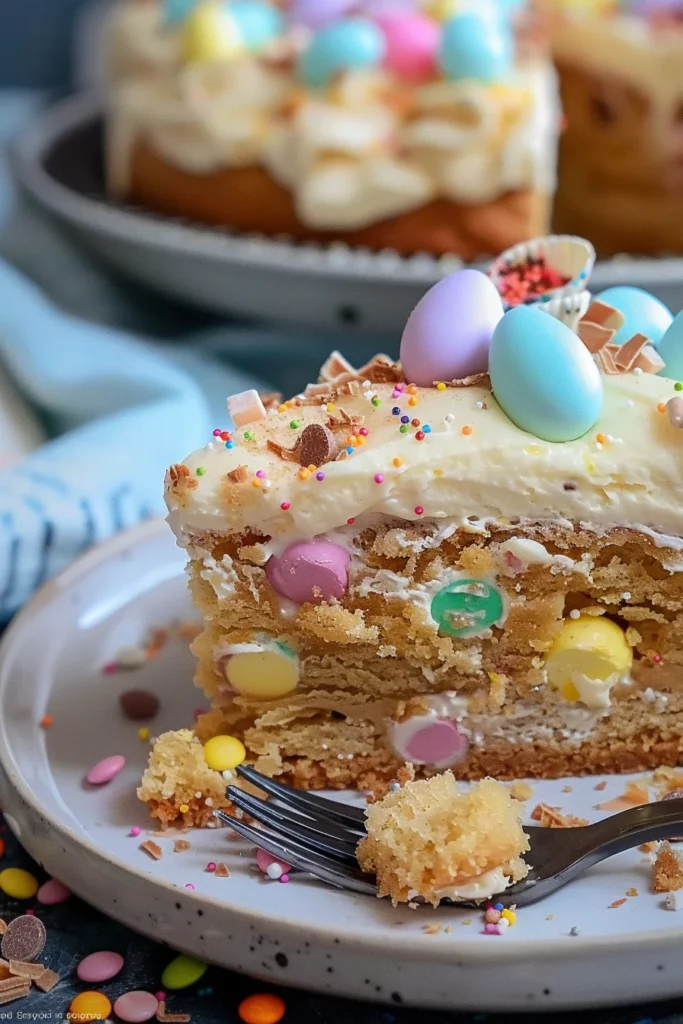
An Easter Chocolate Cookie Cake is essentially a giant, deep-dish chocolate chip cookie baked in a cake tin rather than as individual portions. What sets the “Easter” version apart is the heavy incorporation of spring-themed chocolates—typically candy-coated milk chocolate eggs (like Cadbury Mini Eggs) or pastel-colored chocolate chunks. This version is specifically formulated to be thicker than a standard cookie, providing a fudgy, almost blondie-like consistency. It is traditionally decorated with a piped buttercream border around the edge, which provides a sweet contrast to the salty-sweet dough and serves as a “nest” for even more festive chocolate decorations.
Ingredients
To achieve the perfect bake, understanding your ingredients is key to E-E-A-T (Experience, Expertise, Authoritativeness, and Trustworthiness) in the kitchen.
- Unsalted Butter: We melt the butter here rather than creaming it. This results in a denser, chewier “fudgy” texture rather than a light, cakey one.
- The Sugar Duo: We use a combination of granulated white sugar for those crisp edges and a higher ratio of light brown soft sugar. The molasses in the brown sugar provides the moisture needed for a soft center.
- Cornflour (Cornstarch): This is the secret weapon. It breaks up the gluten in the flour, resulting in a more tender, delicate bite that mimics high-end bakery cookies.
- Bicarbonate of Soda: This provides just enough lift to keep the cake from being a leaden brick, while still maintaining that classic cookie density.
- Sea Salt: Essential for balancing the intense sweetness of the Easter chocolates and buttercream.
- Easter Chocolates: A mix of standard milk chocolate chips and candy-coated eggs provides varying textures—melt-in-your-mouth chocolate paired with a satisfying sugar-shell crunch.
- Vanilla Extract: Always use pure vanilla extract over essence for a deeper, more sophisticated flavor profile that permeates the dough.
Ingredient Substitutions & Tips
If you find yourself missing an ingredient, don’t panic. For a Double Chocolate version, replace 35g of the plain flour with high-quality cocoa powder. If you don’t have Cornflour, you can substitute it with an equal amount of plain flour, though the cookie will be slightly firmer. For those who prefer a Salted Caramel vibe, swap the milk chocolate chips for caramel chips and add an extra pinch of flaky sea salt on top before baking. If you are catering to a smaller crowd, this recipe can be halved and baked in a 6-inch tin, though you will need to reduce the baking time to approximately 18-20 minutes.
Step-by-Step Instructions
- Preparation: Start by preheating your oven to 180°C (160°C fan/350°F). Greasing and lining your 8-inch (20cm) tin is crucial; the high sugar content can cause sticking. Use a circle of parchment paper for the base.
- The Base Mixture: Melt your butter in a large microwave-safe bowl. Whisk in the granulated and brown sugars. Spend a full 2 minutes whisking; you want the sugar to begin dissolving into the fat to create a smooth, shiny crust.
- Emulsifying: Add the egg and vanilla. Whisk until the mixture looks glossy and fully combined.
- Dry Ingredients: Sift in the flour, bicarbonate of soda, salt, and cornflour. Use a spatula to fold the mixture until no streaks of flour remain. Do not overmix, as this develops gluten and makes the cake tough.
- The Mix-ins: Fold in your chocolate chips and about 150g of the Easter chocolates. Reserve the rest for the topping.
- Pressing: Transfer the dough to the tin. It will be thick and sticky. Use the back of a damp spoon or your knuckles to press it into an even layer.
- Baking: Bake for 25-27 minutes. The key is to look for “dry” edges and a center that is set but still has a very slight give. It should not “jiggle,” but it shouldn’t be hard.
- Cooling & Decorating: This is the hardest part—wait! Let it cool in the tin for 30 minutes to set its structure. Once cold, pipe your buttercream border and pile on the remaining treats.
Expert Baking Tips
- Don’t Overbake: Cookie cakes continue to cook from the residual heat of the tin once removed from the oven. If it looks perfectly browned in the oven, it’s likely overdone. Pull it out when the center looks just slightly under-baked.
- Room Temperature Butter for Frosting: Ensure your buttercream butter is truly soft (but not greasy). This allows it to whip up into a cloud-like consistency that is easy to pipe.
- Avoid Flour Compaction: When measuring flour, spoon it into the measuring cup and level it off. Packing it down leads to a dry, crumbly cookie cake.
- Quality Candy: Use high-quality Mini Eggs for the best flavor; some generic versions have a waxy texture that doesn’t melt well.
The Secret to the Perfect Cookie Cake Texture
The most common mistake in cookie cake baking is a “cakey” texture. To ensure your Easter treat remains a “cookie,” the ratio of brown sugar to white sugar is skewed heavily toward brown. Brown sugar is hygroscopic, meaning it attracts and holds onto moisture. When combined with the cornflour, it creates a chemical reaction that inhibits excessive gluten formation. This results in the “fudgy” center that people love in professional cookie cakes. Additionally, melting the butter rather than creaming it removes air from the equation, ensuring the cake remains dense and decadent rather than light and airy.
Serving Suggestions
This Easter Chocolate Cookie Cake is best served at room temperature for the ultimate soft bite, but it is also incredible served warm with a scoop of vanilla bean ice cream. For a festive touch, serve it on a bright pastel platter and cut it into traditional cake wedges. If you’re feeling extra indulgent, a drizzle of warm chocolate ganache over individual slices takes this dessert to a whole new level of luxury.
Storage & Make-Ahead Tips
You can easily make the cookie base a day in advance. Store the un-iced cookie in an airtight container at room temperature. For longer storage, this cake lasts up to 5 days. You can also freeze the baked (un-iced) cookie cake for up to 3 months—just wrap it tightly in plastic wrap and foil. To serve, thaw at room temperature and apply the fresh buttercream.
FAQs
Can I use a larger pan for this recipe?
Yes! If you use a 9-inch (23cm) tin, the cookie will be thinner. Reduce the baking time to roughly 20 minutes to prevent it from becoming too crunchy.
Why did my cookie cake sink in the middle?
This usually happens if the cake is underbaked or if the egg was too large. However, a slight dip is actually perfect for filling with extra chocolate and buttercream!
Can I make this gluten-free?
Yes, you can substitute the plain flour with a high-quality 1:1 gluten-free baking flour blend. The texture may be slightly grainier, but it still tastes delicious.
Can I use cocoa powder in the dough?
Absolutely. Swap 35g of the flour for cocoa powder for a deep chocolate base. You may need to add a teaspoon of milk if the dough feels too dry.
How do I get the “rope” piping look?
Use a “closed star” piping tip (like a 2D tip). Hold the bag at a 45-degree angle and move in a small “S” motion as you move around the perimeter of the cake.
This Easter Chocolate Cookie Cake is more than just a dessert; it’s a festive centerpiece that brings joy to the table. With its chewy texture, rich chocolate flavor, and easy-to-follow steps, it’s a recipe you’ll return to every spring. Don’t be afraid to get creative with your decorations—Easter is the perfect time to go over the top with sprinkles and sweets. Happy baking, and enjoy every buttery, chocolatey bite!
PrintEaster Chocolate Cookie Cake

The ultimate festive dessert: a giant, chewy cookie cake packed with Easter chocolates and topped with smooth vanilla buttercream. Perfect for spring celebrations!
- Prep Time: 15 minutes
- Cook Time: 25 minutes
- Total Time: 40 minutes
- Yield: 12 slices
- Cuisine: American
Ingredients
115 g unsalted butter
55 g white granulated sugar
135 g light brown soft sugar
1 medium/large egg
1 tsp vanilla extract
275 g plain flour
1 tsp bicarbonate of soda
1/2 tsp sea salt
1 tbsp cornflour
150 g milk chocolate chips/chunks
200 g easter chocolates
75 g unsalted butter (room temp)
150 g icing sugar
1/2 tsp vanilla extract
Extra easter chocolates and sprinkles for decoration
Instructions
Preheat oven to 180ºC/160ºC fan and line an 8″/20cm round tin with parchment paper.
In a large bowl, melt the butter. Add both sugars and whisk for 2 minutes until smooth.
Whisk in the egg and vanilla extract until fully combined.
Fold in the plain flour, bicarbonate of soda, sea salt, and cornflour until a dough forms.
Mix in the chocolate chips and 200g of Easter chocolates.
Press the dough evenly into the bottom of the prepared tin.
Bake for 25-27 minutes until the top looks dry and set (it should not wobble).
Cool in the tin for 30 minutes, then transfer to a wire rack to cool completely.
For the buttercream, beat the room temperature butter for 2 minutes.
Add icing sugar and vanilla, beating until pale and fluffy.
Pipe a border around the cooled cookie using a star tip.
Decorate with remaining chocolates and sprinkles.
Notes
• Best eaten within 2 days but stays fresh for 4-5 days in an airtight container.
• For a thinner 9″ cookie cake, reduce bake time to 20 minutes.
• If cornflour is unavailable, add 25g extra flour (note: texture will be slightly less soft).
• To make it double chocolate, use 225g flour and 35g cocoa powder.
• Ensure the cookie is completely cold before piping the buttercream to prevent melting.