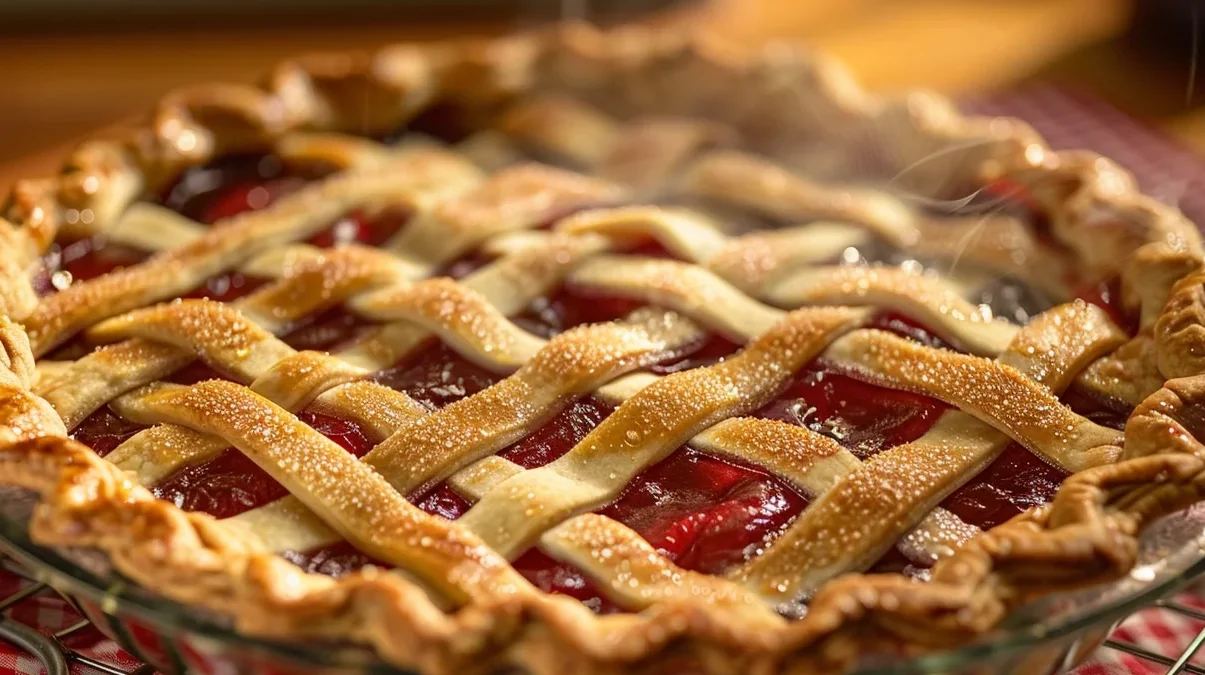
There is something undeniably nostalgic about the first rhubarb harvest of the spring. Often referred to as the “pie plant,” rhubarb brings a unique, assertive tartness that signals the end of winter. While many are quick to pair this perennial stalk with strawberries, the true connoisseur knows that the secret to an elevated rhubarb dessert lies in the bright, sophisticated notes of citrus. This Lattice-Topped Rhubarb Orange Pie is a masterclass in flavor balance. The floral essence of orange zest and the sweetness of the juice temper the rhubarb’s bite, creating a filling that is complex and refreshing. Wrapped in a flaky, golden lattice crust, this pie isn’t just a dessert; it’s a centerpiece. Whether you’re a seasoned baker or a weekend enthusiast, this guide will help you achieve a bakery-quality result that tastes like home.
Why You’ll Love This Recipe
You will fall in love with this recipe because it moves beyond the standard “sweet-on-sweet” fruit pies. The combination of rhubarb and orange creates a sophisticated “sweet-tart” profile that keeps you coming back for another bite. The addition of cornstarch ensures a filling that is thick and jammy rather than runny, solving the most common complaint with rhubarb pies. Furthermore, the lattice top isn’t just for aesthetics; it provides the perfect ratio of buttery crust to fruit filling and allows steam to escape, preventing a soggy bottom. It is a visually stunning dessert that looks far more difficult to make than it actually is, making it perfect for spring gatherings, Easter, or Mother’s Day.
What Is Rhubarb Orange Pie?
Rhubarb Orange Pie is a traditional American fruit pie that celebrates the short but vibrant rhubarb season. Rhubarb itself is technically a vegetable, but its high acidity makes it behave like a fruit in culinary applications. Historically, rhubarb pies were often quite simple, using just sugar and flour. This specific variation introduces fresh orange—both the aromatic zest (rind) and the juice—to provide a layer of acidity that complements the rhubarb’s natural flavor. The “lattice” refers to the method of weaving strips of pastry over the top of the filling. This technique is functional, allowing the high moisture content of the rhubarb to evaporate during the long baking process, resulting in a concentrated, flavorful filling.
Ingredients Overview
To create the best Rhubarb Orange Pie, quality ingredients are paramount.
- Pastry for a Double Crust: You can use a high-quality store-bought dough, but a homemade butter-and-shortening crust provides the best flakiness.
- Rhubarb (1 pound): Look for stalks that are firm and crisp. While red stalks provide a prettier pink hue, green stalks are equally flavorful.
- Granulated Sugar (1-1/4 cups): This may seem like a lot, but rhubarb is incredibly tart and requires this amount to reach a palatable balance.
- Cornstarch (1/4 cup): This is your insurance policy against a “soupy” pie. It reacts with the orange juice and rhubarb liquid to create a glossy, thick sauce.
- Orange Rind and Juice: Use a microplane for the zest to avoid the bitter white pith. One large orange should yield the required 2 teaspoons of zest and about 1/4 cup of juice.
- Butter (2 tablespoons): Dotting the top of the filling with butter adds a richness that rounds out the sharp flavors.
- Salt: Just a quarter teaspoon to enhance the overall flavor profile.
Ingredient Substitutions & Tips
If you cannot find fresh rhubarb, frozen rhubarb is a viable substitute. However, you must thaw it completely in a colander and pat it dry to remove excess moisture. For the citrus, if oranges aren’t available, lemon rind and juice work beautifully, though you may want to increase the sugar by an extra tablespoon as lemons are more acidic. If you prefer a more “Strawberry-Rhubarb” vibe, you can replace half of the rhubarb with sliced strawberries, but reduce the orange juice by half to compensate for the berries’ higher water content. For a vegan version, simply use a vegetable shortening-based crust and a high-quality vegan butter substitute for dotting the filling.
Step-by-Step Instructions
- Prepare the Base: Start by dividing your chilled pastry dough into two unequal portions. The larger portion (about 60%) will be your bottom crust. Roll it out on a floured surface to about 12 inches in diameter. Drape it over your 9-inch pie pan, ensuring there are no air bubbles. Trim the edges so they hang about 1/2 inch over the rim.
- Create the Lattice Strips: Roll out the smaller portion of dough to 1/8-inch thickness. Using a pastry wheel or a sharp knife, cut strips approximately 3/4 inch wide. Place these on a parchment-lined tray and chill while you prep the filling.
- Mix the Filling: In a large mixing bowl, whisk together the sugar, cornstarch, and salt. Add the chopped rhubarb, orange rind, and orange juice. Toss thoroughly until every piece of rhubarb is coated. If you want a more vibrant color, you can add a single drop of pink food coloring here.
- Assemble: Pour the filling into the prepared bottom crust. Evenly distribute the pieces of butter over the top of the rhubarb mixture.
- Weave the Lattice: Lay half of your pastry strips vertically across the pie. Fold back every other strip and lay a horizontal strip across. Unfold the vertical strips. Repeat this process, alternating the strips you fold back, until a woven pattern is formed.
- Seal and Bake: Fold the bottom crust overhang over the ends of the lattice strips and crimp or flute the edges together to seal. Brush the lattice with milk and sprinkle with sugar. Bake at 400°F (200°C) for 50-60 minutes.
Expert Baking Tips
The key to a perfect pie is temperature control. Keep your dough as cold as possible; if it starts to feel soft while you are weaving the lattice, pop the whole pie in the freezer for 10 minutes before continuing. This ensures the butter layers in the pastry remain distinct, creating those coveted “flakes.” Secondly, don’t underbake. Many people pull their pies out once the crust is golden, but with rhubarb, you must wait until you see thick, slow bubbles of juice popping through the lattice. If the bubbles are thin and watery, the cornstarch hasn’t fully activated yet. If the crust is browning too fast, loosely tent the pie with aluminum foil.
The Art of the Perfect Lattice
A lattice top isn’t just a decoration; it’s an engineering marvel for fruit pies. By weaving the strips, you create a structural mesh that holds the fruit in place while allowing maximum airflow. For a professional look, use a fluted pastry wheel to give the strips “pinked” edges. If you find weaving intimidating, you can simply lay the strips in a cross-hatch pattern without weaving, though the seal won’t be as strong. Always remember to “anchor” your strips by pressing them firmly into the bottom crust before fluting. This prevents the lattice from shrinking away from the edges during the high-heat baking process.
Serving Suggestions
For the ultimate experience, serve this Lattice-Topped Rhubarb Orange Pie slightly warm, but not hot. A warm pie allows the aromas of the orange and rhubarb to bloom. The classic accompaniment is a generous scoop of high-quality vanilla bean ice cream, which melts into the tart juices. Alternatively, a dollop of unsweetened whipped cream or a pour of cold heavy cream (English style) provides a lovely textural contrast to the crisp lattice and jammy fruit.
Storage & Make-Ahead Tips
Rhubarb pie can be kept at room temperature for up to two days, covered loosely with foil or a pie dome. For longer storage, refrigerate for up to four days. To regain the crust’s crispness, reheat slices in a 350°F oven for 10 minutes. You can also make this pie ahead by freezing it unbaked. Assemble the pie, wrap it tightly in plastic wrap and foil, and freeze for up to 3 months. Bake directly from frozen, adding 15-20 minutes to the total bake time.
FAQs
Q: Why is my rhubarb pie runny?
A: This usually happens if the pie wasn’t baked long enough for the cornstarch to reach its thickening temperature (about 203°F) or if the rhubarb had too much moisture. Ensure the juices are bubbling thickly before removing from the oven.
Q: Do I need to peel the rhubarb?
A: No, you do not need to peel rhubarb. The skin softens significantly during baking and provides the beautiful pink color. Only remove any leaves, as they are toxic.
Q: Can I use a different thickener?
A: Yes, you can use quick-cooking tapioca (use 3 tablespoons) or all-purpose flour (use 1/2 cup), though cornstarch provides the clearest, glossiest set.
Q: My lattice broke while weaving. What do I do?
A: Don’t panic! Simply “glue” the pieces back together with a drop of water or milk. Once baked, these small imperfections usually disappear into the golden crust.
Baking a Lattice-Topped Rhubarb Orange Pie is a rewarding ritual that celebrates the best of seasonal produce. By combining the old-fashioned charm of a woven crust with the bright, modern pairing of orange and rhubarb, you create a dessert that is both timeless and exciting. Don’t be afraid of the tartness—embrace it! The interplay of textures and flavors in this pie is exactly what makes home baking so special. Pull out your rolling pin, grab some fresh stalks, and enjoy the process.
PrintLattice Topped Rhubarb Orange Pie
A stunning seasonal dessert that perfectly balances the assertive tartness of rhubarb with the bright, citrusy notes of fresh orange. The lattice top ensures a crisp crust and a beautiful presentation.
Ingredients
pastry for a double crust pie
1–1/4 cups sugar
1/4 cup cornstarch
1/4 teaspoon salt
1 bunch (1 pound) rhubarb cut in 1-1/2 inch lengths
2 teaspoon grated orange rind (or 1 teaspoon grated lemon rind)
juice of one orange
2 tablespoons butter
1 tablespoon milk for brushing
1 tablespoon sugar for garnish
Instructions
1. Divide the pastry into unequal halves. Roll out the larger portion and fit into a 9-inch pie pan. Trim the pastry 1/2 inch beyond the rim of the pan.
2. Roll out the remaining pastry to 1/8-inch thickness and cut into strips about 3/4 inch wide.
3. Mix the sugar, cornstarch, and salt. Add the rhubarb, rind, and juice and toss until well mixed. Tint pink if desired and turn into the pastry shell.
4. Dot the filling with small pieces of butter.
5. Arrange the pastry strips over the pie in a lattice pattern, securing it to the pie shell firmly and fluting the pie shell and strips together to form a high rim.
6. Brush the pastry lattice lightly with milk and sprinkle the extra sugar over the top.
7. Bake in a preheated 400 degrees F oven for 50-60 minutes, or until the filling has thick bubbles that do not break easily.
Notes
Ensure the rhubarb is cut into uniform pieces for even cooking.
If the crust edges brown too quickly, cover them with aluminum foil.
Let the pie cool completely (at least 3-4 hours) before slicing to allow the filling to set.