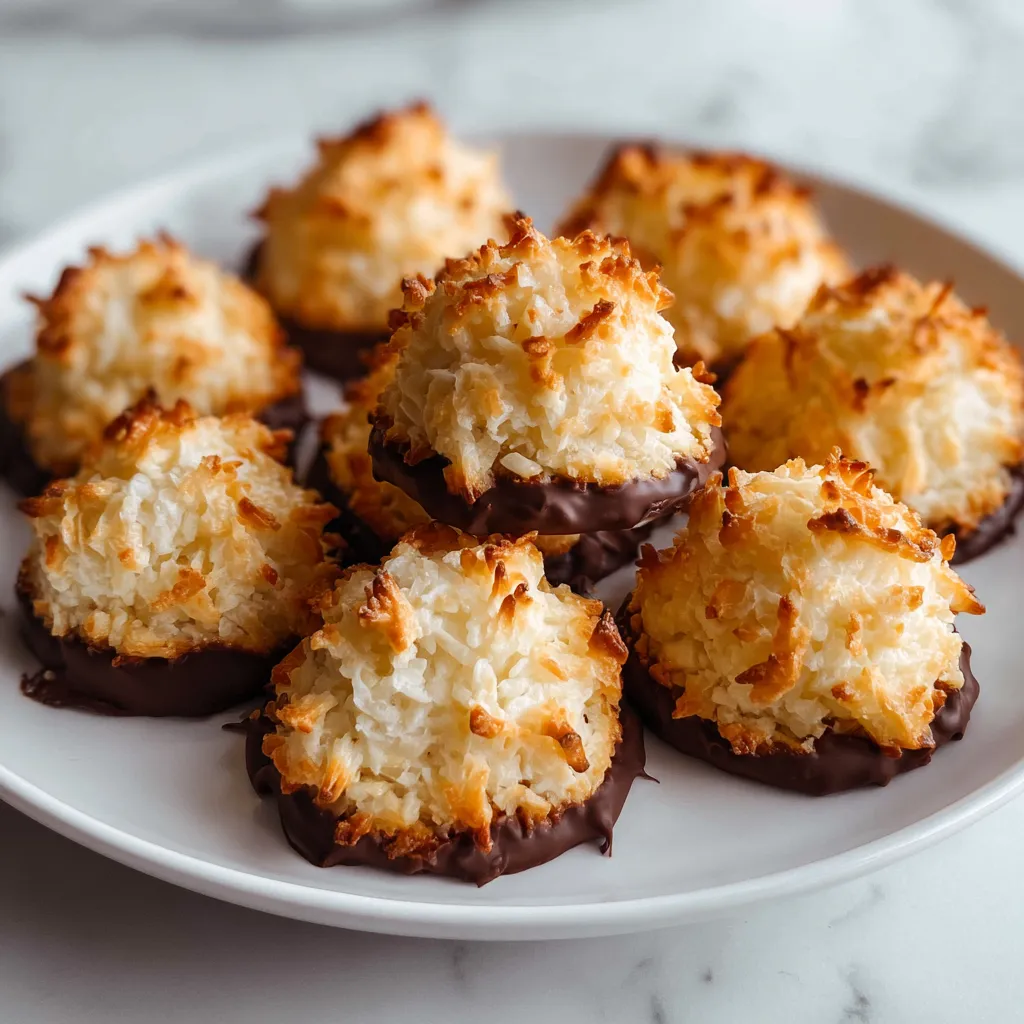
The aroma of toasted coconut wafting through your kitchen is enough to make anyone’s mouth water, and these coconut macaroons are the reason why. If you’ve been searching for a dessert that offers a satisfying crunch on the outside while remaining incredibly moist and chewy on the inside, look no further. This recipe is the gold standard for home bakers, combining minimal effort with maximum flavor. Unlike their finicky French cousins (the macaron), these Italian-inspired macaroons are humble, rustic, and virtually foolproof. Whether you’re preparing a holiday platter or just looking for a gluten-friendly treat to pair with your afternoon coffee, these golden mounds of coconut heaven are guaranteed to become a household favorite. Let’s dive into the secrets of creating the perfect macaroon.
Why You’ll Love This Recipe
There is a reason why coconut macaroons have remained a staple in bakeries for decades. First and foremost, the texture is unparalleled; the combination of shredded coconut and whisked egg whites creates a light yet dense cookie that feels indulgent without being heavy. Secondly, this recipe is incredibly versatile. You can keep them simple, or elevate them with a dark chocolate dip for a “Mounds” bar-inspired flavor profile. Best of all, they require only a handful of pantry staples and about 15 minutes of active prep time. They are also naturally low in fat (excluding the coconut) and can be easily adapted for gluten-free diets, making them an inclusive option for gatherings.
What Is a Coconut Macaroon?
To truly appreciate this recipe, it’s important to distinguish the coconut macaroon from the French macaron. While they share a similar name and an origin rooted in Italian almond paste cookies, they couldn’t be more different. A French macaron is a sandwich cookie made with almond flour and meringue, known for its smooth shell and ruffled “feet.” A coconut macaroon, however, is a rugged, chewy mound of shredded coconut held together by egg whites and sugar. Popularized in the late 19th century when shredded coconut became widely available, the macaroon became a favorite in Jewish communities during Passover because it contains no leavening agents and can be made without flour.
Ingredients Overview: The Secret to Success
The quality of your ingredients will directly impact the final result of your macaroons. Here is what you need to know:
- Sweetened Shredded Coconut: For this recipe, we use the standard bagged shredded coconut found in the baking aisle. It is moist and pre-sweetened, which contributes to the soft texture. Avoid “desiccated” coconut for this specific recipe, as it is too dry and will result in a crumbly cookie.
- Granulated Sugar: This helps to macerate the coconut slightly and creates that iconic sticky, chewy center.
- All-Purpose Flour: A small amount of flour acts as a binder, preventing the macaroons from spreading too much. It provides structural integrity.
- Large Egg Whites: These are the “glue” of the recipe. Whisking them until frothy incorporates air, which helps the cookies rise slightly and stay light.
- Vanilla Extract: Use a high-quality pure vanilla extract. The floral notes of vanilla perfectly complement the tropical nuttiness of the coconut.
- Salt: A pinch of salt is essential to balance the sweetness of the coconut and sugar.
- Semi-Sweet Chocolate: If you choose to dip them, use a high-quality chocolate chip or a chopped bar for the smoothest melt.
Ingredient Substitutions & Tips
Customizing your macaroons is easy. If you are baking for someone with a gluten intolerance, you can substitute the 1/4 cup of all-purpose flour with almond flour or a gluten-free 1:1 baking blend. The result will be just as delicious, though slightly more delicate. If you prefer a less sweet cookie, you can use unsweetened shredded coconut, but you may need to increase the sugar by two tablespoons to compensate for the flavor. For a nutty twist, try adding half a teaspoon of almond extract alongside the vanilla—it creates a flavor profile reminiscent of an almond joy.
Step-by-Step Instructions
- Preparation is Key: Start by preheating your oven to 325°F (160°C). This lower temperature is crucial; it allows the coconut to toast slowly without burning the sugar. Line your baking sheet with parchment paper or a silicone baking mat. Never grease the pan directly, as the sugar in the coconut will stick.
- Mix the Dry Ingredients: In a large bowl, combine the 14 oz of shredded coconut, 1/2 cup of sugar, 1/4 cup of flour, and 1/4 teaspoon of salt. Use a fork or whisk to break up any clumps of coconut so the flour is evenly distributed.
- Whisk the Egg Whites: In a separate clean bowl, whisk the 4 egg whites and 1 teaspoon of vanilla extract. You don’t need to reach stiff peaks—just whisk until the mixture is very frothy and bubbly.
- Combine: Pour the egg whites over the coconut mixture. Use a rubber spatula to fold the mixture together. Ensure there are no dry pockets of flour or coconut at the bottom of the bowl.
- Form the Macaroons: Using a small cookie scoop (about 1.5 tablespoons), scoop the mixture and press it firmly against the side of the bowl to compact it. Release the mound onto the baking sheet.
- The Bake: Bake for 20-25 minutes. Keep a close eye on them during the last 5 minutes. You are looking for a beautiful golden brown color on the “stray” pieces of coconut and the bottoms.
- Cooling: This is the hardest part! Let them cool on the pan for 10 minutes before moving them to a wire rack. They need this time to “set” their structure.
Expert Baking Tips
To achieve bakery-level results, pay attention to the “packing” of the macaroon. When you scoop the mixture, you want to compress it slightly. If the mound is too loose, the egg whites will seep out the bottom, creating a “foot,” and the cookie may fall apart. Another pro tip: if you find your mixture is too wet, let it sit for 5 minutes before scooping. This allows the coconut to absorb some of the moisture. Finally, always use room temperature egg whites; they foam up much better than cold ones, providing a lighter texture to the finished macaroon.
Mastering the Golden Toasted Edge
The hallmark of a perfect macaroon is the contrast between the white, snowy interior and the deep golden-brown exterior. To achieve this, ensure your oven rack is in the center position. If the rack is too high, the tops will burn before the centers are set; too low, and the bottoms will scorch. If you notice your macaroons are browning too quickly, tent them loosely with a piece of aluminum foil. The goal is “toasted,” not “burnt.” The toasted bits of coconut provide a nutty, caramelized flavor that cuts through the sweetness of the sugar.
Serving Suggestions
These macaroons are spectacular on their own, but they also pair beautifully with other flavors. Serve them alongside a platter of fresh berries for a light summer dessert. If you’ve dipped them in chocolate, they are the perfect companion to a glass of cold milk or a robust espresso. For a festive touch, you can drizzle them with white chocolate or sprinkle a tiny bit of flaky sea salt over the chocolate base while it’s still wet to enhance the cocoa notes.
Storage & Make-Ahead Tips
Coconut macaroons stay fresh and chewy for a surprisingly long time. Store them in an airtight container at room temperature for up to 5 days. If you want to keep them longer, they freeze beautifully. Place the cooled macaroons in a single layer on a tray to freeze, then transfer them to a freezer-safe bag for up to 3 months. To thaw, simply leave them on the counter for 30 minutes.
FAQs
Can I use unsweetened coconut?
Yes, but since unsweetened coconut is drier, you may need to add an extra tablespoon of egg white or a splash of coconut milk to ensure the mixture isn’t too crumbly.
Why did my macaroons spread and flatten?
This usually happens if the egg whites weren’t whisked enough or if the mounds weren’t packed tightly. Make sure to compress the mixture in your scoop before placing it on the pan.
Are these macaroons gluten-free?
As written, they contain 1/4 cup of all-purpose flour. However, you can easily substitute this with almond flour or a gluten-free flour blend to make them 100% gluten-free.
Do I have to use a cookie scoop?
While not mandatory, a scoop ensures all macaroons are the same size, which means they will bake evenly. If using a spoon, try to keep the mounds uniform in shape.
How do I melt the chocolate for dipping?
Use a microwave-safe bowl and heat the chocolate chips in 30-second intervals, stirring in between, until smooth. Adding a teaspoon of coconut oil can give the chocolate a nice shine.
Making homemade coconut macaroons is a rewarding experience that yields a dessert far superior to anything you’ll find in a grocery store. With their crisp, toasted shells and melt-in-your-mouth centers, they are the ultimate treat for any occasion. Whether you’re a seasoned baker or a novice in the kitchen, this recipe provides a foolproof path to success. Don’t forget the chocolate dip—it’s the proverbial icing on the cake! Enjoy your baking!
PrintCoconut Macaroon Recipe
These coconut macaroons are the ultimate treat for coconut lovers. They feature a crisp, golden exterior with a soft, moist, and incredibly chewy center. This recipe is simple enough for beginners but delivers bakery-quality results every single time.
- Prep Time: 15 minutes
- Cook Time: 25 minutes
- Total Time: 40 minutes
- Yield: 24 macaroons
- Cuisine: American
Ingredients
Sweetened shredded coconut – 14 oz
Granulated sugar – 1/2 cup
All-purpose flour – 1/4 cup
Salt – 1/4 teaspoon
Large egg whites – 4
Vanilla extract – 1 teaspoon
Semi-sweet chocolate chips (optional) – 1 cup
Instructions
Preheat your oven to 325°F (160°C) and line a large baking sheet with parchment paper or a silicone mat.
In a large mixing bowl, stir together the shredded coconut, sugar, flour, and salt until evenly distributed.
In a separate medium bowl, whisk the egg whites and vanilla extract vigorously until the mixture is frothy and light.
Pour the egg white mixture over the coconut mixture. Use a spatula to fold and mix until every shred of coconut is well-moistened.
Using a small cookie scoop or a tablespoon, drop tightly packed mounds of the mixture onto the prepared baking sheet, spaced 1 inch apart.
Bake for 20 to 25 minutes, or until the edges and tops are beautifully golden brown.
Transfer to a wire rack and allow the macaroons to cool completely before handling.
Optional: Melt chocolate chips in 30-second increments in the microwave. Dip the bottoms of the macaroons and place on parchment until set.
Notes
• Use room temperature egg whites for better frothiness and easier mixing.
• Pack the scoops tightly to ensure the macaroons don’t fall apart after baking.
• For a gluten-free version, swap the all-purpose flour for almond flour or a 1:1 GF blend.
• Store in an airtight container at room temperature for up to 5 days.