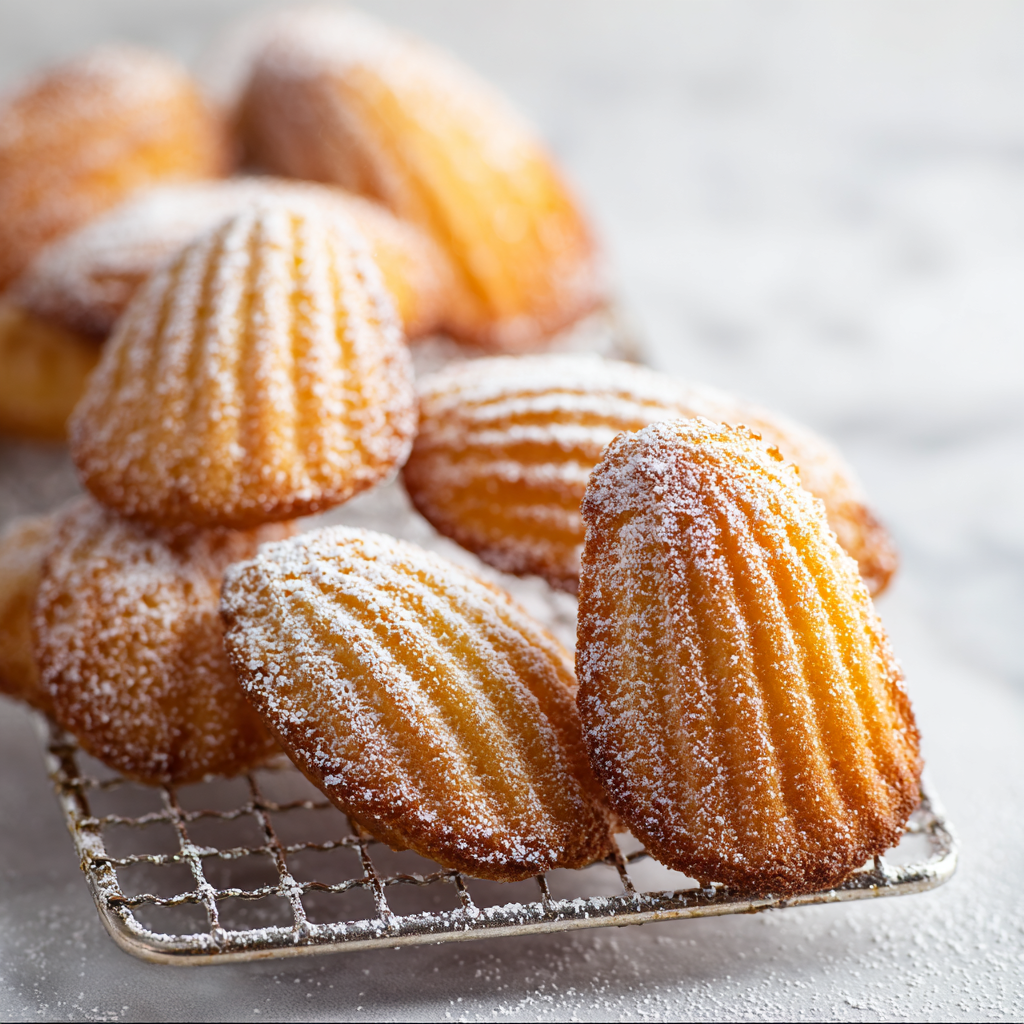
There is something inherently romantic about the scent of fresh butter and lemon zest wafting through a kitchen. For many, the Madeleine is more than just a small cake; it is a sensory journey back to childhood, famously immortalized by Marcel Proust. These delicate, shell-shaped treats are the hallmark of French patisserie—not quite a cookie, not quite a sponge cake, but a perfect hybrid of both. The ultimate Madeleine is defined by its crisp, golden-brown edges, a tender, airy crumb, and most importantly, the signature “hump” (or la bosse) on its back. If you have ever struggled to achieve that professional look at home, you are in the right place. This recipe uses the secret of browned butter to elevate the flavor and a specific chilling technique to ensure every single cake rises to perfection.
Why You’ll Love This Recipe
You will fall in love with this recipe because it bridges the gap between amateur baking and professional pastry arts. Unlike standard recipes that use plain melted butter, our version utilizes beurre noisette (browned butter), which imparts a deep, nutty complexity that balances the bright citrus of the lemon zest. The texture is sublime—delicate enough to melt in your mouth, yet sturdy enough to survive a dip into your afternoon tea or coffee. Furthermore, this batter is incredibly forgiving and can be made up to two days in advance, making it the perfect stress-free dessert for hosting or a quiet weekend treat.
What Is a Madeleine?
A Madeleine is a traditional small sponge cake from Commercy and Liverdun, two communes in the Lorraine region of northeastern France. While often mistaken for a cookie due to its size, it is technically a génoise sponge cake. The batter is characterized by a high proportion of eggs and butter, which are whipped to create a light, aerated structure. The iconic shell shape comes from the specialized heavy-metal or silicone molds they are baked in. Historically, they were served as a tea-time snack, valued for their elegant appearance and simple, high-quality ingredients that highlight the skill of the baker through texture and temperature control.
Ingredients Overview
To achieve the best results, every ingredient in this recipe serves a specific structural or flavor purpose.
- Unsalted Butter: We use one full stick, which we transform into browned butter. This provides the moisture and the signature “French” flavor profile.
- Eggs: Three large, room-temperature eggs are essential. They provide the lift and the structure. Cold eggs will cause the browned butter to seize, ruining the emulsion.
- Granulated Sugar: This sweetens the cake and helps achieve those slightly caramelized, crisp edges.
- All-Purpose Flour: This provides the necessary structure. Ensure you measure using the “spoon and level” method to avoid a heavy, dense cake.
- Baking Powder: While the whipped eggs provide some lift, the baking powder ensures the hump reaches its maximum potential.
- Lemon Zest & Vanilla: These are the primary aromatics. The oils in the lemon zest bloom when added to the warm butter, creating a fragrance that is present in every bite.
- Salt: A small amount of salt balances the sweetness and enhances the nuttiness of the butter.
Ingredient Substitutions & Tips
While the classic version is hard to beat, you can adapt this recipe to your preferences. If you prefer a warmer flavor, replace the lemon zest with orange zest or even a pinch of cardamom. For a floral note, a teaspoon of honey added to the egg mixture provides a beautiful golden hue and extra moisture. If you need a gluten-free option, a high-quality 1:1 gluten-free flour blend works surprisingly well here, though the “hump” may be slightly less pronounced. Always use high-fat European-style butter if possible, as it has less water content and results in a richer, more authentic flavor.
Step-by-Step Instructions
- Brown the Butter: Start by cutting your butter into tablespoons. Melt it in a heavy saucepan over medium heat. Watch closely as it foams and sizzles. Once the milk solids turn golden brown and smell nutty, remove from heat. Stir in the vanilla and lemon zest immediately; the residual heat will release the citrus oils. Let this cool.
- Prepare the Dry Ingredients: In a medium bowl, whisk together the flour, baking powder, and salt. This ensures no clumps of leavening agent are left behind.
- The Ribbon Stage: Using a stand mixer with a whisk attachment, beat the eggs and sugar. Start slow, then increase to medium-high. You are looking for the “ribbon stage”—where the mixture is pale, thick, and falls off the whisk in a slow, defined trail. This should take 3 to 4 minutes.
- Incorporate: Gently fold the dry ingredients into the egg mixture using a spatula. Do not overmix, or you will deflate the air you just worked so hard to incorporate.
- The Butter Fold: Slowly pour the cooled browned butter into the batter, folding gently until the batter is glossy and uniform.
- The Cold Rest: This is the most important step. Cover the bowl and refrigerate for at least 4 hours. This hydrates the flour and chills the fats.
- Baking: Preheat your oven to 375°F. Butter and flour your madeleine pan thoroughly. Drop level scoops of cold batter into the center of each mold. Bake for 12 minutes. The thermal shock of the cold batter hitting the hot oven is what creates the famous hump.
- Cool and Release: Let them sit in the pan for 2 minutes before gently tapping them out onto a wire rack.
Expert Baking Tips
- Thermal Shock is Key: Never bake the batter at room temperature. The contrast between the chilled batter and the hot oven creates the steam pressure needed to push the center of the cake upward, forming the hump.
- Don’t Over-Grease: While you want the cakes to release easily, too much butter in the molds can cause the edges to fry rather than bake, leading to a greasy finish. A light, even coating of butter followed by a dusting of flour is the gold standard.
- The “Hump” Check: If your madeleines are flat, your oven may not be hot enough, or your batter wasn’t cold enough. Use an oven thermometer to verify the temperature.
The Secret to the Perfect Madeleine Hump
The “bosse” or hump is the most sought-after feature of a Madeleine. Scientificially, this occurs due to a combination of two factors: aeration and temperature differential. By whipping the eggs to the ribbon stage, you create thousands of tiny air bubbles. When the cold batter is placed into a preheated 375°F oven, the air bubbles and the moisture in the butter expand rapidly. Because the edges of the shell mold are thin and metal, they set almost instantly. The only place for the expanding air to go is up through the center of the cake, which is the last part to set. This creates the characteristic dome.
Serving Suggestions
Madeleines are at their absolute peak within the first hour of baking. Serve them slightly warm, dusted with a light snowfall of confectioners’ sugar. They are the quintessential companion to a cup of Earl Grey tea or a dark, rich espresso. For a more decadent dessert, dip the bottom of the cooled madeleines into melted dark chocolate and sprinkle with crushed pistachios or sea salt. They also pair beautifully with a side of fresh raspberries and a dollop of crème fraîche.
Storage & Make-Ahead Tips
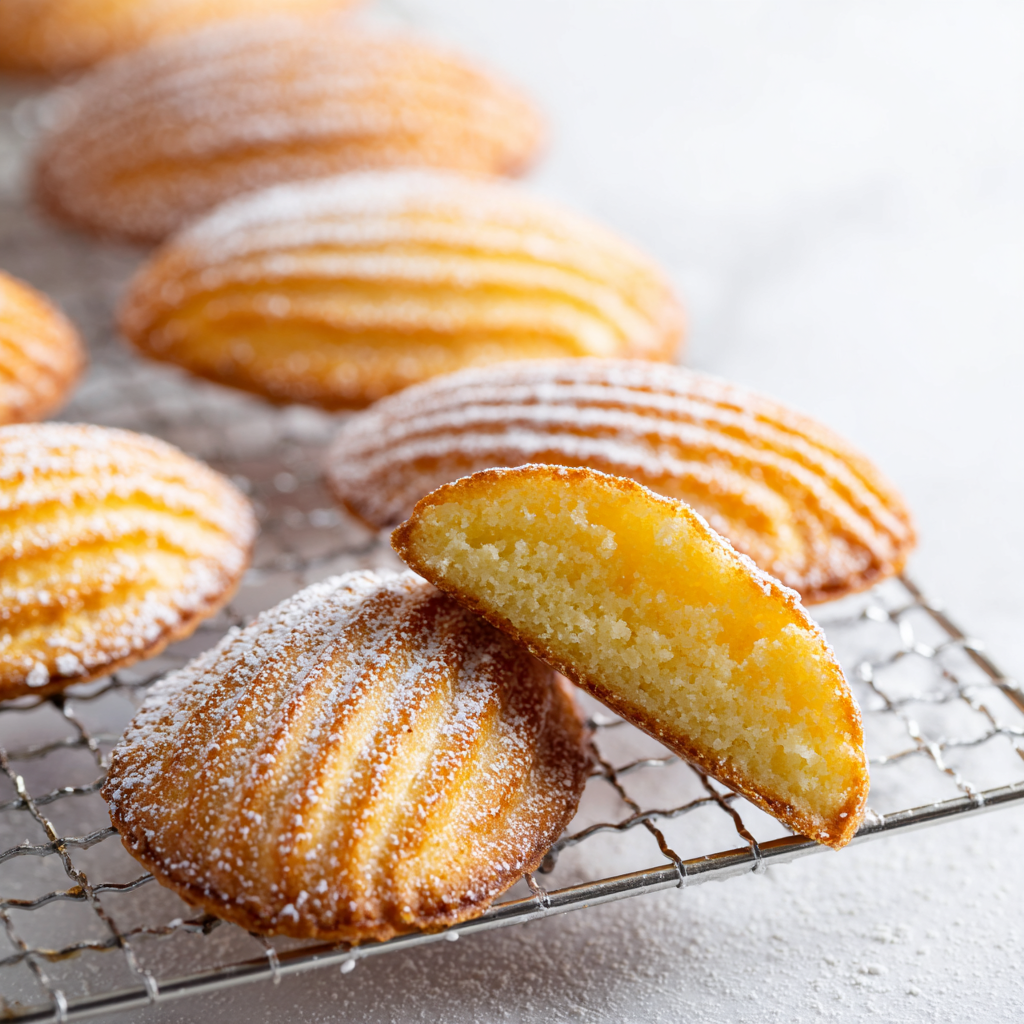
Madeleines are notorious for losing their texture quickly. If you have leftovers, store them in an airtight container at room temperature for up to two days. To revive them, pop them in a 300°F oven for 3 minutes to restore the crisp edges. For make-ahead convenience, you can store the unbaked batter in the refrigerator for up to 48 hours. You can also freeze baked madeleines in a single layer; simply thaw and warm them before serving.
FAQs
Why did my madeleines stick to the pan?
This usually happens if the pan wasn’t greased thoroughly or if the cakes were left to cool in the pan for too long. Always grease every nook of the shell design and release them while they are still warm.
Can I make these without a madeleine pan?
While you can bake the batter in a muffin tin, they won’t be “Madeleines.” The shell shape provides the specific surface-area-to-volume ratio that creates the unique texture of crisp edges and a soft center.
Why is my browned butter gritty?
The “grit” is actually the toasted milk solids. These contain all the flavor! Do not strain them out unless you want a very subtle flavor; for this recipe, keep them in.
Can I skip the 4-hour chill time?
If you skip the chilling, you will still have a tasty cake, but you will almost certainly not get the signature hump. The chill time is functional, not optional.
How do I know when they are done?
The edges will be a deep golden brown, and the “belly” (the hump) should spring back when lightly touched with your finger.
Classic French Madeleines
These Classic French Madeleines are light, airy, and feature the traditional ‘hump’ on the back. By using browned butter (beurre noisette) and chilling the batter, you achieve a sophisticated flavor profile and a professional texture that rivals any Parisian patisserie.
- Prep Time: 20 minutes
- Cook Time: 12 minutes
- Total Time: 4 hours
- Yield: 20 cakes
- Cuisine: French
Ingredients
Unsalted butter – 1 stick (4 ounces)
Vanilla extract – 2 teaspoons
Lemon zest – 1 1/2 teaspoons, finely grated
All-purpose flour – 1 cup
Baking powder – 1 1/4 teaspoons
Salt – 1/4 teaspoon
Large eggs – 3 (at room temperature)
Granulated sugar – 3/4 cup
Confectioners sugar – 1/2 cup (optional for dusting)
Instructions
Brown the butter in a heavy saucepan over medium heat until golden solids appear.
Stir vanilla and lemon zest into the browned butter and let cool to room temperature.
Whisk flour, baking powder, and salt in a medium bowl and set aside.
Whip eggs and sugar on medium-high for 3-4 minutes until thick and pale.
Gently fold the flour mixture into the egg mixture in three additions.
Fold in the cooled browned butter until just incorporated.
Cover and refrigerate the batter for at least 4 hours or up to 2 days.
Preheat oven to 375°F (190°C) and butter/flour a madeleine pan.
Spoon level scoops of batter into the center of the molds.
Bake for 12 minutes until the ‘bellies’ rise and edges are golden.
Cool in the pan for 2 minutes, then transfer to a wire rack.
Dust with confectioners sugar before serving.
Notes
• Do not skip the chilling time; it is essential for the signature hump.
• Use room temperature eggs to ensure the batter emulsifies properly.
• Browning the butter adds a nutty flavor that distinguishes authentic madeleines.
• Ensure the pan is heavily greased to prevent sticking.