There is something so timeless about a Bundt cake. It’s the kind of dessert that feels grand and elegant the moment it hits the table, yet it requires zero tricky layer-stacking or crumb-coating. This Easter Buttermilk Bundt Cake is my absolute favorite way to celebrate the season. It’s a dense, velvety cake infused with the warmth of nutmeg and cinnamon, topped with a tangy buttermilk cream cheese glaze that is literally finger-licking good.
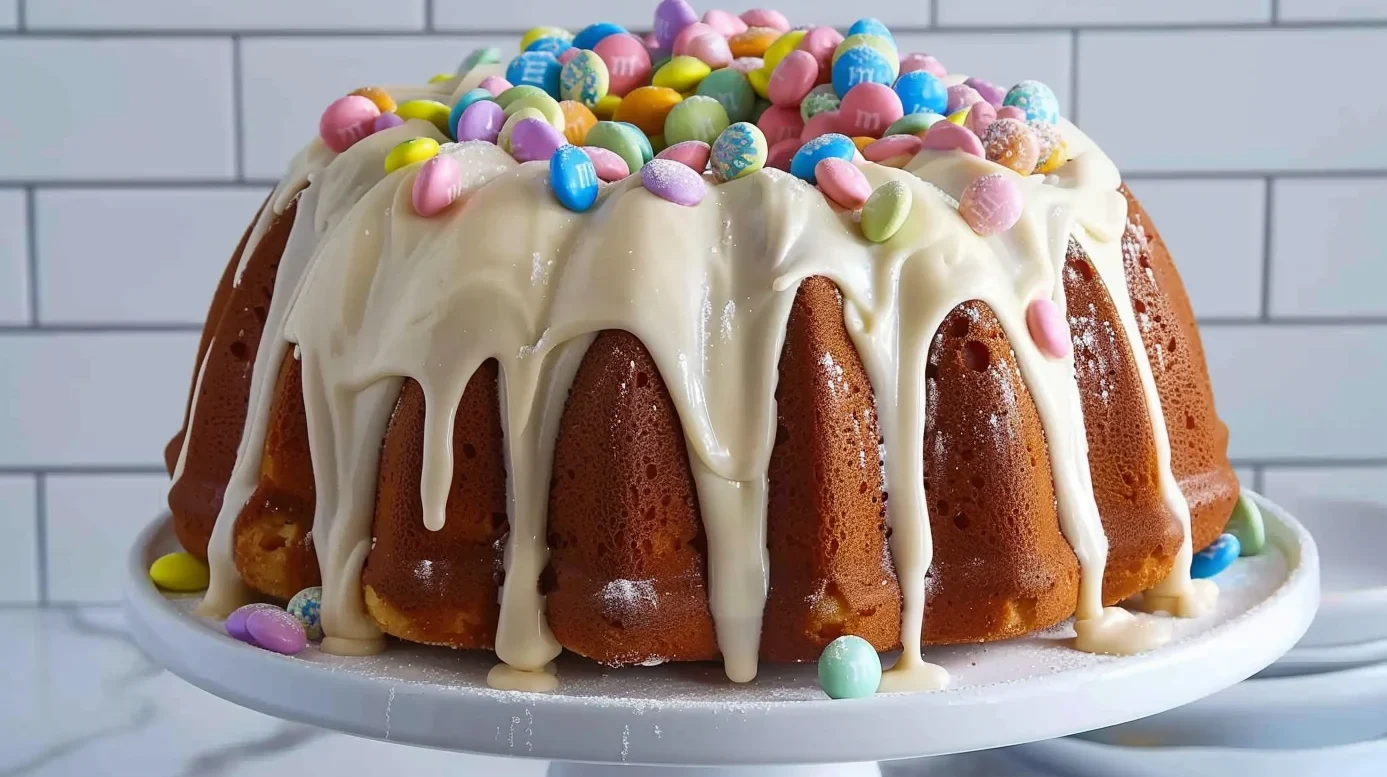
The “wow” factor comes at the very end. By filling the center of the Bundt with crushed and whole candy-coated chocolates, you create a beautiful “nest” effect. It’s festive, it’s charming, and it makes for the most incredible Pinterest-worthy centerpiece for your Easter Sunday dinner. If you’ve been looking for a recipe that balances a cozy, homemade taste with a professional look, you’ve found it.
Why You’ll Love This Recipe
- The Perfect Crumb: Thanks to the buttermilk and four large eggs, this cake is incredibly moist and tender with a tight, velvety crumb.
- Warm Spice Profile: The addition of nutmeg and cinnamon gives it a “doughnut-shop” flavor that sets it apart from a standard vanilla cake.
- Showstopping Decoration: Filling the center with candies is the easiest way to make a cake look professionally styled without any advanced piping skills.
- Crowd-Sized: Bundt cakes are naturally easy to slice and serve, making this perfect for large family gatherings.
- Balanced Sweetness: The tang of the cream cheese and buttermilk in the frosting perfectly offsets the sweet chocolate eggs.
Ingredient Notes
Quality matters when you’re making a cake this substantial. Here is what to keep in mind for your shopping list:
- Softened Butter: Make sure your butter is truly at room temperature. It should be soft enough to leave an indentation when pressed, but not greasy. This is vital for “creaming” the sugar to get a light, airy cake.
- Buttermilk: This is the secret ingredient! The acidity in the buttermilk reacts with the baking soda to create a beautiful rise and a tender texture. If you don’t have it, you can make a quick substitute by adding 1 tablespoon of lemon juice to 1 cup of regular milk, but real buttermilk is always better for the glaze.
- Ground Nutmeg: If you can grate it fresh, do it! Nutmeg is the “secret” flavor that makes this cake taste like it came from a high-end bakery.
- Easter Candy-Coated Chocolates: Use a mix of Cadbury Mini Eggs and Easter M&Ms. Crushing some of them while leaving others whole creates a more realistic and visually interesting “nest” in the center.
Step-by-Step Instructions
1. Prep the Pan
Preheat your oven to 350°F. Bundt pans are notorious for sticking, so be generous with your non-stick spray. Make sure to get into every nook and cranny of the design so the cake releases cleanly.
2. Cream the Butter and Sugars
In a large bowl, beat the butter, brown sugar, and granulated sugar together. You want to see the mixture become pale and fluffy—this usually takes about 3–4 minutes of mixing.
3. Add the Eggs and Liquids
Beat in the eggs one at a time, ensuring each is fully incorporated before adding the next. This prevents the batter from breaking. Mix in your vanilla and buttermilk until just combined.
4. Mix the Dry Ingredients
Sift in the flour, baking powder, baking soda, salt, nutmeg, and cinnamon. Turn your mixer to low and beat until the flour just disappears. Crucial Tip: Do not over-mix here, or your cake will be tough instead of tender!
5. Bake to Perfection
Transfer the batter to your pan and smooth the top. Tap it firmly on the counter to release any trapped air bubbles. Bake for 45 minutes. You’ll know it’s done when a toothpick comes out clean or with just a few moist crumbs.
6. The 20-Minute Rule
Let the cake cool in the pan for exactly 20 minutes before flipping it onto a wire rack. If you flip it too soon, it might break; too late, and the sugar might cause it to stick to the pan.
7. Glaze and Nest
Once cooled, whisk together your cream cheese frosting. Use a piping bag (or a Ziploc with the corner snipped) to create long, sweeping lines over the top. Finally, fill that center hole with your chocolate eggs.
Expert Tips for Best Results
- The Tap Technique: Always tap your filled Bundt pan on a cutting board or towel-covered counter. This forces the batter into the intricate designs of the pan and pops any large air pockets.
- Room Temp Eggs: Cold eggs can cause the creamed butter to seize up. Place your eggs in a bowl of warm water for 5 minutes before using if you forgot to take them out of the fridge.
- Measure Flour Correctly: Spoon the flour into your measuring cup and level it off with a knife. Never scoop directly from the bag, as this packs the flour and leads to a dry cake.
- Glaze Consistency: If your frosting is too thick to drizzle, add buttermilk one teaspoon at a time until it reaches a “slow-flow” consistency.
Variations and Substitutions
- The Carrot Cake Twist: You can fold in 1 cup of finely shredded carrots and 1/2 cup of chopped pecans for an Easter-themed carrot Bundt.
- Chocolate Version: Swap 1/2 cup of the flour for high-quality cocoa powder for a rich chocolate buttermilk cake.
- Gluten-Free: Use a high-quality 1:1 gluten-free flour blend. Bundt cakes are very forgiving for gluten-free baking because the pan provides so much structure.
Storage and Freezing
To Store: Because of the cream cheese frosting, this cake should be stored in the refrigerator. It will stay moist and delicious for up to 4 days. Let it sit at room temperature for 20 minutes before serving for the best flavor.
To Freeze: You can freeze the un-frosted cake for up to 3 months. Wrap it tightly in plastic wrap and then foil. Thaw overnight in the fridge and add the fresh frosting and candies right before serving.
FAQ
Q: My cake stuck to the pan! What happened? A: This is usually due to the pan not being greased enough or the cake staying in the pan too long. If it’s stuck, try placing the pan back in a warm oven for 2–3 minutes to loosen the fats, then try the flip again.
Q: Can I use a different type of frosting? A: While the cream cheese buttermilk glaze is traditional, a simple chocolate ganache or even a dusting of powdered sugar would work if you’re in a pinch.
Q: Why use both brown and white sugar? A: White sugar helps with the rise and crisp edges, while brown sugar adds moisture and that deep, molasses-like flavor that pairs so well with nutmeg.
This Easter Buttermilk Bundt Cake is more than just a dessert; it’s a memory-maker. The combination of the spicy, tender cake and the “surprise” nest of chocolates in the middle makes it a joy to serve. I hope it finds a place on your holiday table this year!