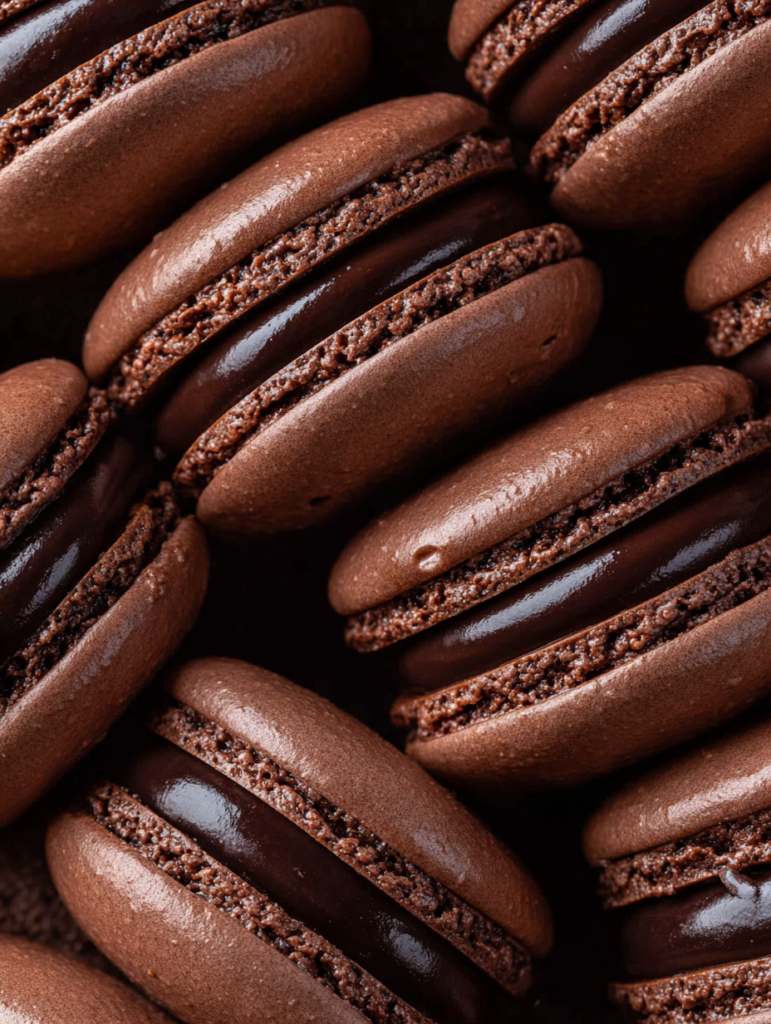
There is perhaps no pastry more iconic, or more intimidating, than the French macaron. With their sleek, eggshell-thin crusts and those delicate, ruffled “feet,” they represent the pinnacle of home baking achievement. While many bakers fear the dreaded cracked shell or hollow interior, mastering the chocolate macaron is entirely achievable with the right technique.
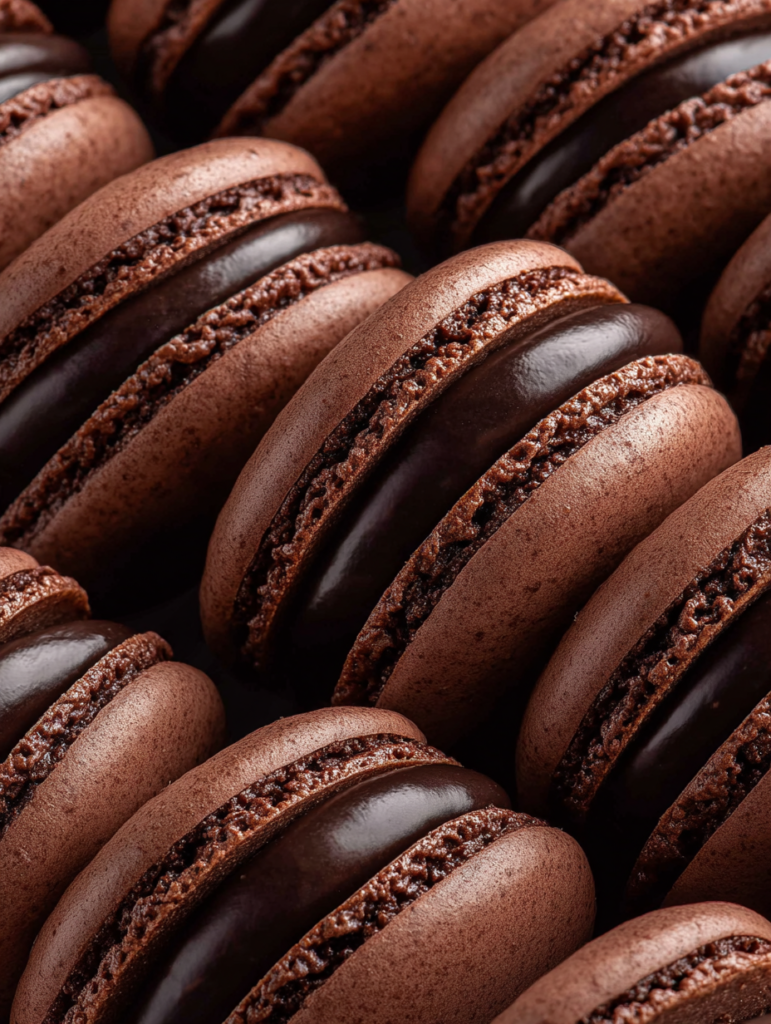
In this comprehensive guide, we are moving away from the temperamental French meringue method and embracing the stability of the Italian meringue technique. By boiling a sugar syrup and incorporating it into whipped egg whites, we create a structural foundation that is far more forgiving for home ovens. These chocolate macarons aren’t just a treat for the eyes; infused with high-quality Dutch-processed cocoa, they offer a deep, sophisticated flavor that pairs beautifully with silky ganache or light buttercream. Whether you are a seasoned pro or a first-timer, this step-by-step masterclass will demystify the process and help you achieve bakery-quality results in your own kitchen.
Why You’ll Love This Recipe
You will love this recipe because it prioritizes structural integrity without sacrificing that signature melt-in-your-mouth texture. Using the Italian meringue method—where hot sugar syrup is whisked into egg whites—provides a much more stable batter than the traditional French method. This means fewer collapsed shells and more consistent “feet.” Furthermore, the inclusion of Dutch-processed cocoa powder creates a rich, dark chocolate profile that isn’t overly sweet. This recipe is designed for precision, using metric measurements to ensure that every batch comes out identical. It is the perfect balance of professional pastry science and accessible home baking, resulting in macarons that look like they belong in a Parisian boutique.
What Is a French Chocolate Macaron?
A French macaron is a meringue-based sandwich cookie made primarily from almond flour, egg whites, and sugar. It is often confused with the “macaroon,” which is a dense, shredded coconut cookie. A true macaron consists of two shells that are crisp on the outside and chewy on the inside, held together by a flavorful filling like ganache, buttercream, or jam. In this specific chocolate version, we incorporate cocoa powder into the almond mixture. While we call them “French,” this recipe utilizes the Italian meringue method for the shell, a technique favored by world-renowned pastry chefs like Pierre Hermé for its stability and glossy finish.
Ingredients Overview
To achieve the perfect macaron, the quality and type of ingredients are non-negotiable.
- Almond Flour (150g): You must use “super-fine” blanched almond flour. If the flour is too coarse, your shells will be bumpy rather than smooth. Even with fine flour, processing it with the sugar is essential.
- Powdered Sugar (150g): Also known as icing sugar, this provides the sweetness and structure. Ensure it does not contain cornstarch in excessive amounts, though a small amount is usually present in commercial brands.
- Dutch-Processed Cocoa Powder (24g): This is vital. Dutch-processed cocoa has been alkalized to neutralize its acidity, which prevents it from reacting negatively with the egg whites. It also provides a darker, richer color.
- Egg Whites (110g): These must be divided into two equal 55g portions. One portion is mixed with the dry ingredients to form a paste (the “mass”), and the other is whipped into the meringue. Using a digital scale is the only way to ensure success here.
- Granulated Sugar (150g) and Water (37g): These are boiled together to create the syrup that stabilizes the Italian meringue.
- Cream of Tartar (1/4 tsp): This acid helps the egg whites maintain their structure during the initial whipping phase.
Ingredient Substitutions & Tips
While macarons are notoriously finicky about substitutions, there are a few adjustments you can make. If you cannot find cream of tartar, an equal amount of fresh lemon juice or white vinegar will serve the same purpose of stabilizing the proteins in the egg whites. For the cocoa powder, avoid “natural” cocoa powder if possible, as its acidity can cause the shells to crack. If you have a nut allergy, some bakers have had success with finely ground sunflower seed flour, though the flavor and texture will vary significantly. Always ensure your eggs are at room temperature; cold egg whites will not whip to the necessary volume for a stable meringue.
Step-by-Step Instructions
1. The Prep Work
Before you even turn on the mixer, prep is key. Wipe your mixing bowl and whisk with white vinegar to remove any traces of fat, which can prevent the egg whites from whipping. Sift your almond flour, powdered sugar, and cocoa powder at least twice after pulsing them in a food processor. This ensures a perfectly smooth shell.
2. Creating the “Mass”
Mix 55g of the egg whites into your sifted dry ingredients. Use a spatula to fold and press until a very thick, uniform paste forms. Cover this tightly with plastic wrap to prevent it from drying out while you prepare the meringue.
3. The Italian Meringue
Combine the granulated sugar and water in a small saucepan. Heat over medium-high. While the syrup heats, begin whipping the remaining 55g of egg whites and cream of tartar to soft peaks. When the syrup reaches exactly 118C (244F), slowly pour it into the whipping egg whites in a steady stream. Continue whipping on medium-high until the bowl feels barely warm and the meringue is stiff and glossy.
4. Macaronage (The Mixing)
This is the “make or break” step. Fold one-third of the meringue into your almond paste to lighten it. Then, gently fold in the rest. Use the spatula to scrape the sides and cut through the middle. You are looking for the “ribbon stage”—where the batter falls off the spatula in a continuous ribbon and disappears back into the bowl after about 10 seconds.
5. Piping and Drying
Pipe 3cm rounds onto a silicone mat. Tap the tray firmly on the counter to release air bubbles. Let the trays sit for 20-30 minutes. You should be able to touch the top of a macaron without it sticking to your finger.
6. The Bake
Bake at 150C (302F) for 10-12 minutes. The macarons are done when the tops don’t “wobble” when gently pushed. Cool completely before peeling them off the mat.
Expert Baking Tips
The most important tip for macaron success is humidity control. If your kitchen is very humid, the shells may never form a “skin” during the drying phase, leading to cracked tops. Use a dehumidifier or wait for a dry day. Secondly, oven temperature accuracy is paramount. Most home ovens fluctuate by 10-20 degrees. Use an oven thermometer to ensure you are actually baking at 150C. Finally, do not skip the maturation process. Macarons are actually better 24 to 48 hours after they are filled, as the moisture from the filling softens the interior of the shell.
Troubleshooting: Hollows and Cracked Shells
If your macarons have cracked tops, it usually means you didn’t let them dry long enough or your oven was too hot. If they are hollow, the meringue might have been over-whipped, or the oven temperature was too low, preventing the inside from setting before the outside. No feet? This usually stems from a batter that was over-mixed (too thin) or a lack of a “skin” before baking. Remember, macaronage is an art; it’s better to under-mix slightly and test frequently than to over-mix, which cannot be undone.
Serving Suggestions
Chocolate macarons are incredibly versatile. Serve them alongside a shot of espresso for a classic Parisian afternoon break, or pair them with a glass of dry sparkling wine or Champagne for an elegant dessert. They also make a stunning addition to a dessert charcuterie board, nestled between fresh raspberries and dark chocolate shards. For a plated dessert, serve three macarons with a dollop of whipped cream and a drizzle of salted caramel.
Storage & Make-Ahead Tips
Macarons are the ultimate make-ahead treat. Once filled, store them in an airtight container in the refrigerator for up to 5 days. For longer storage, you can freeze the filled macarons (or just the shells) for up to 3 months. When ready to eat, thaw them in the refrigerator overnight. Always bring macarons to room temperature for at least 20 minutes before serving to ensure the filling is the perfect consistency.
FAQs
Q: Can I use liquid egg whites from a carton?
A: It is not recommended. Pasteurized carton egg whites often fail to whip into a stable meringue. Freshly cracked egg whites are best.
Q: Why are my macarons sticking to the parchment paper?
A: They are likely underbaked. If they don’t release easily, put them back in the oven for another 1-2 minutes. Alternatively, let them cool completely; they often release better once cold.
Q: Do I need a kitchen scale?
A: Yes. Macarons are based on chemical ratios. Volume measurements (cups) are too inconsistent for this specific recipe.
Q: Can I make these without a food processor?
A: You can, but you must sift the almond flour and powdered sugar through a very fine-mesh sieve at least three times to achieve a smooth surface.
Q: How do I get the chocolate flavor even stronger?
A: Use a high-quality dark chocolate ganache (70% cocoa) for the filling. The shell provides the texture, but the filling provides the primary flavor punch.
While the journey to the perfect French Chocolate Macaron requires patience and precision, the reward is a world-class dessert that never fails to impress. Don’t be discouraged if your first batch isn’t perfect—even professional chefs deal with the occasional “failed” tray. Each batch teaches you more about your oven and your technique. Keep practicing the “ribbon stage” and soon, you’ll be piping perfect macarons with ease. Happy baking!
PrintFrench Chocolate Macarons
Indulge in the gold standard of French patisserie with these Chocolate Macarons. Using a professional Italian meringue technique, these cookies yield a perfectly crisp shell and a chewy, rich cocoa interior.
- Prep Time: 45 minutes
- Cook Time: 15 minutes
- Total Time: 60 minutes
- Yield: 30 macarons
- Cuisine: French
Ingredients
Almond flour – 150 g
Powdered sugar – 150 g
Dutch processed cocoa powder – 24 g
Egg whites (divided into two 55g portions) – 110 g
Granulated sugar – 150 g
Water – 37 g
Cream of tartar (or lemon juice) – 1/4 tsp
Vanilla extract – 1 tsp
Buttercream or Ganache for filling – 1/2 batch
Instructions
Pulse almond flour, powdered sugar, and cocoa in a food processor 10-20 times; sift into a large bowl.
Mix 55g of egg whites into the dry ingredients to create a thick paste; cover with plastic wrap.
Combine granulated sugar and water in a pot; bring to a boil until it reaches 118C/244F.
Whip remaining 55g egg whites with cream of tartar until frothy; slowly pour in hot syrup while whisking.
Whisk meringue until stiff, glossy, and cooled; fold in vanilla extract.
Incorporate meringue into the paste in stages until the batter flows like a slow ribbon.
Pipe 3cm rounds onto lined trays; tap firmly to release air bubbles.
Let sit at room temperature for 20-30 minutes until a skin forms.
Bake at 150C/302F for 10-12 minutes; cool completely before filling.
Notes
• Use a kitchen scale for all measurements; volume is too imprecise for macarons.
• Ensure your mixing bowl is completely free of grease by wiping with vinegar.
• Dutch-processed cocoa is essential for the deep color and balanced pH.
• Let macarons ‘mature’ in the fridge for 24 hours after filling for best texture.