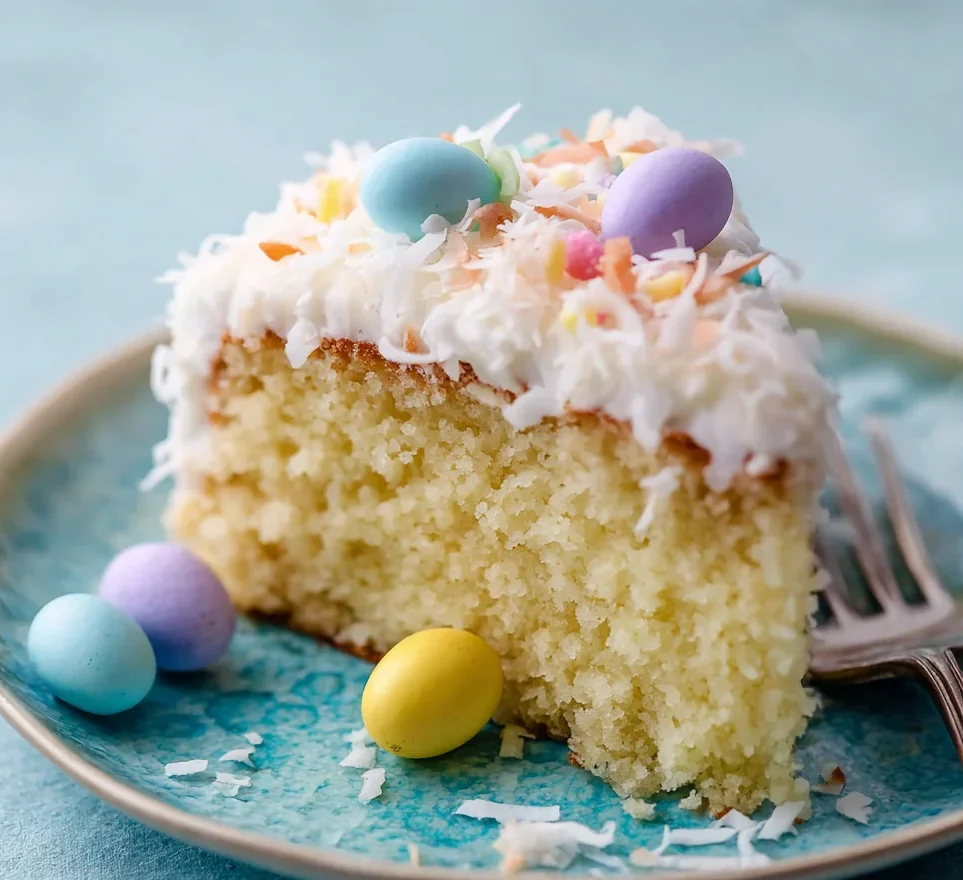
Spring is officially in the air, and there is no better way to celebrate the season of renewal than with a dessert that looks as beautiful as it tastes. This Lemon Coconut Easter Bundt Cake is the quintessential spring treat—a vibrant, citrusy masterpiece that mimics an adorable bird’s nest. Imagine a crumb so tender it practically melts on your tongue, infused with the zesty brightness of fresh lemons and the tropical sweetness of shredded coconut. Whether you are hosting a formal Easter brunch or simply want a cheery weekend project, this cake delivers professional results with a cozy, homemade soul. The addition of candy-coated chocolate eggs in the center adds a whimsical touch that will delight children and adults alike.
Why You’ll Love This Recipe
This isn’t just another dry Bundt cake; it is a meticulously balanced recipe designed for maximum flavor and moisture. You will love the dual-fat approach—using both butter for that rich, classic flavor and vegetable oil to ensure the cake stays moist for days. The inclusion of sour cream provides a subtle tang that complements the lemon perfectly, while cake flour ensures a fine, velvety crumb that feels sophisticated. Furthermore, the decoration is virtually foolproof. Unlike layered cakes that require precise leveling and piping, this Bundt relies on a rustic “nest” aesthetic that looks stunning even if you aren’t a professional decorator.
What Is a Lemon Coconut Easter Bundt Cake?
At its core, this recipe is a premium pound-cake-style Bundt infused with two iconic spring flavors. The “Easter” element comes from the unique presentation: a ring-shaped cake topped with creamy white frosting and toasted-looking coconut, with the center hole filled with pastel-colored chocolate eggs to resemble a nest. It is a celebratory dessert that bridges the gap between the heavy comforts of winter and the light, fruity desires of summer. By using a Bundt pan, we create a high surface-area-to-volume ratio, allowing for plenty of golden-brown edges and a massive well in the middle for our festive “eggs.”
Ingredients Overview
To achieve the perfect texture, every ingredient plays a critical role.
- Cake Flour (360g): Unlike all-purpose flour, cake flour has a lower protein content, which prevents the development of tough gluten, resulting in a softer bite.
- The Leaveners: A combination of baking powder and baking soda gives this dense batter the lift it needs.
- Butter & Oil: Softened unsalted butter provides the structural “lift” during creaming, while oil ensures the cake remains moist even when refrigerated.
- Lemon Zest & Juice: We use both to maximize the citrus profile without making the batter too acidic.
- Full-Fat Sour Cream: This is the secret weapon for moisture and a slight, pleasant tang.
- Sweetened Coconut: We use it both inside the batter for texture and on top for the “nest” appearance.
- Cream Cheese Frosting: A tangy, zesty glaze that acts as the “glue” for your coconut and chocolate eggs.
Ingredient Substitutions & Tips
If you don’t have cake flour on hand, you can make a substitute by removing 2 tablespoons of all-purpose flour from every cup and replacing them with 2 tablespoons of cornstarch. Sift this mixture several times to ensure it is well-combined. For the sour cream, a thick, full-fat Greek yogurt works beautifully as a 1:1 replacement. If you prefer a less sweet profile, you can swap the sweetened shredded coconut for unsweetened desiccated coconut, though you may want to pulse it in a food processor briefly to soften the texture. Lastly, if you are avoiding coconut extract, simply double the vanilla extract for a more traditional lemon-vanilla profile.
Step-by-Step Instructions
- Prep the Foundation: Start by preheating your oven to 350°F (177°C). The most important step for any Bundt is greasing the pan. Use a baking spray with flour or brush on a mixture of melted butter and flour to hit every crevice.
- Creaming the Base: In a stand mixer, beat your room-temperature butter until creamy. Add the sugar and lemon zest. Beat on high for at least 3 minutes. This aerates the butter, which is vital for a light cake.
- Emulsifying Fats: Stream in the oil, then add the eggs one at a time. Mixing the sour cream and extracts at this stage ensures a smooth, emulsified base.
- The Alternate Method: Whisk your milk and lemon juice together (it will curdle slightly—this is normal!). Add your dry ingredients in three parts, alternating with the milk mixture. Mix until just combined to avoid a rubbery cake.
- Bake: Fold in the coconut by hand. Pour the thick batter into your prepared pan. Bake for 55–65 minutes. If the top browns too quickly, tent it with foil at the 40-minute mark.
- Cooling & Decorating: Let the cake rest in the pan for exactly 2 hours. This allows the structure to set before you invert it. Once completely cool, whip up your lemon cream cheese frosting, spread it over the top, and shower with coconut and chocolate eggs.
Expert Baking Tips
- Temperature Matters: Ensure your eggs, milk, and sour cream are at room temperature. Cold ingredients will cause the butter to seize, leading to a broken batter and an uneven bake.
- Measure Accurately: Use the “spoon and level” method for your flour or, better yet, use a kitchen scale. Too much flour is the number one cause of a dry Bundt cake.
- The Release: Never try to flip a Bundt cake while it is piping hot. The steam needs to subside so the cake pulls away from the edges naturally.
- Zest First: Always zest your lemons directly into the sugar. The abrasive sugar crystals help release the essential oils from the zest, intensifying the lemon flavor.
The Secret to a Perfect Bundt Cake Release
The biggest fear with Bundt cakes is the “stick.” To guarantee a clean release, avoid using regular butter and flour alone, which can sometimes form a paste that glues the cake to the pan. Instead, use a specialized “baking spray” that contains flour (like Baker’s Joy) or make “cake goop”—a homemade mixture of equal parts oil, shortening, and flour. Apply this with a pastry brush into every single nook of the design. When it comes time to flip, if the cake feels stuck, place a warm, damp towel over the bottom of the inverted pan for 10 minutes; the steam will help loosen the grip.
Serving Suggestions
This cake is a centerpiece in its own right. Serve it on a elevated cake stand to highlight the “nest” effect. For an extra touch of elegance, you can garnish the base of the stand with fresh mint leaves or edible flowers like pansies. It pairs wonderfully with a crisp glass of Prosecco or a hot cup of Earl Grey tea. If serving for a crowd, slice the cake into thin wedges—it’s rich enough that a little goes a long way!
Storage & Make-Ahead Tips
Because of the cream cheese frosting, this cake should be stored in the refrigerator. Use a cake carrier to keep it airtight; it will stay fresh for up to 5 days. If you want to make it ahead of time, you can bake the cake a day early, wrap it tightly in plastic wrap once cool, and frost it the morning of your event. To freeze, wrap the unfrosted cake in two layers of plastic wrap and one layer of foil for up to 3 months.
FAQs
Can I use all-purpose flour instead of cake flour?
While you can use the cornstarch substitution mentioned above, 100% all-purpose flour will result in a slightly tougher, breadier crumb. For the intended “melt-in-your-mouth” texture, cake flour is highly recommended.
Why did my Bundt cake sink in the middle?
This usually happens if the cake is underbaked or if the oven door was opened too early, causing a temperature drop. Always test the center with a long skewer; it should come out clean or with just a few moist crumbs.
Can I make this in a regular 9×13 pan?
Yes! You can bake this batter in a 9×13 inch pan. The bake time will likely be shorter, around 35–45 minutes.
How do I toast the coconut for the topping?
If you want a browner “nest,” spread the coconut on a baking sheet and toast at 325°F for 5–8 minutes, tossing frequently until golden.
This Lemon Coconut Easter Bundt Cake is more than just a recipe; it’s a celebration of spring flavors and family traditions. Its bright, citrusy notes and whimsical design make it the perfect ending to any holiday meal. Don’t be intimidated by the Bundt pan—with the right preparation and a bit of patience during the cooling process, you will produce a stunning dessert that looks like it came straight from a high-end bakery. Happy baking and Happy Easter!
PrintLemon Coconut Easter Bundt Cake

An incredibly moist and bright Lemon Coconut Bundt Cake, featuring a tender crumb from cake flour and a tangy lemon cream cheese frosting. The center is filled with chocolate eggs for a festive Easter nest look.
Ingredients
3 cups (360g) cake flour
3 teaspoons baking powder
1/2 teaspoon baking soda
1/2 teaspoon salt
1 cup (226g) unsalted butter, softened
1 3/4 cups (350g) granulated sugar
1 tablespoon lemon zest
1/2 cup (120ml) vegetable oil
5 large eggs, room temperature
2 teaspoons vanilla extract
1 teaspoon coconut extract
1/2 cup (120g) full-fat sour cream
2/3 cup (180ml) whole milk
1/4 cup (60ml) fresh lemon juice
1 cup (100g) sweetened shredded coconut
8 oz (226g) brick cream cheese, softened
1/4 cup (56g) unsalted butter, softened
2 cups (240g) confectioners sugar
1–2 tablespoons fresh lemon juice
1.5 cups shredded coconut for topping
1–2 cups candy-coated chocolate eggs
Instructions
1. Preheat oven to 350°F (177°C) and grease a 10-12 cup Bundt pan thoroughly.
2. Whisk flour, baking powder, baking soda, and salt in a medium bowl.
3. Beat butter on high for 1 minute. Add sugar and zest, then beat for 3 minutes until light.
4. Mix in oil. Add eggs one at a time, followed by extracts and sour cream.
5. Combine lemon juice and milk. Alternate adding dry ingredients and milk mixture to the batter in 3 additions.
6. Fold in 1 cup of coconut. Pour into pan and bake for 55-65 minutes.
7. Cool in pan for 2 hours before inverting. Cool completely.
8. Beat frosting ingredients until smooth. Frost cake, top with coconut, and fill the center with candy eggs.
Notes
Use cake flour for the best texture.
Ensure all dairy and eggs are at room temperature for a smooth emulsion.
Store leftovers in the refrigerator for up to 5 days.