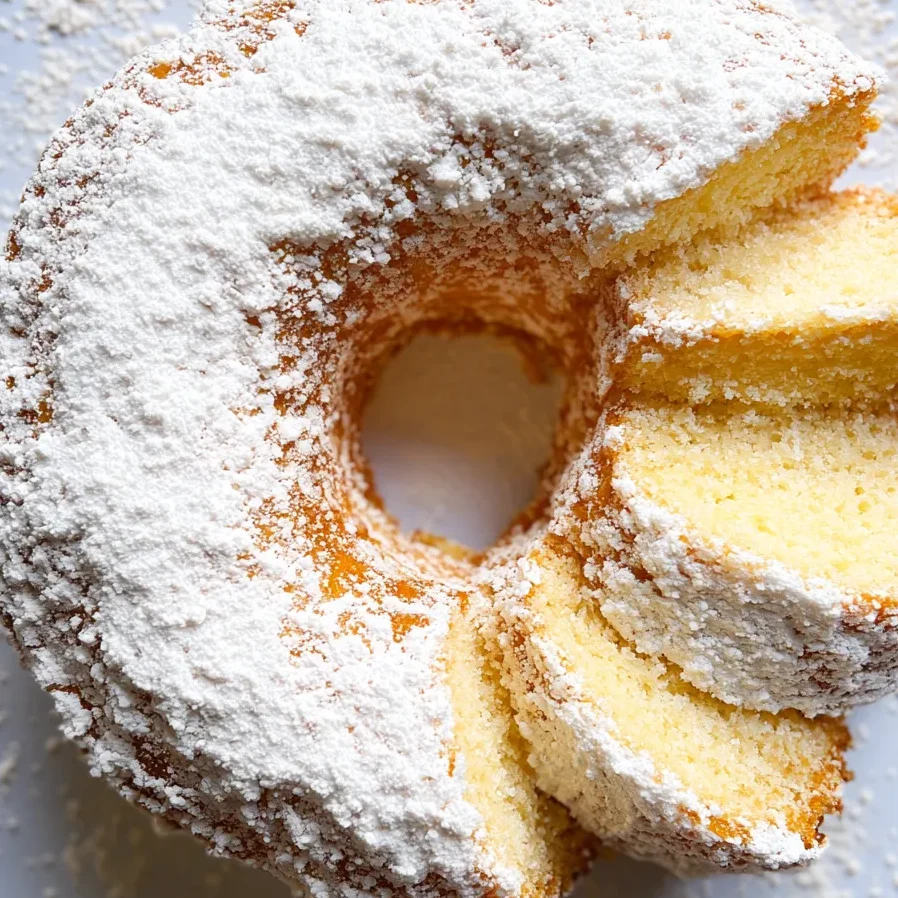
There is something inherently magical about the smell of a classic bakery. You know the one—the scent of warm yeast, fried dough, and that unmistakable hint of nutmeg and sweet sugar. While we all love a fresh donut, the process of deep-frying at home can be a messy, intimidating chore. Enter the Powdered Sugar Donut Cake. This recipe delivers everything you love about a classic “old-fashioned” powdered donut but in the form of a tall, beautiful tube cake. It features a dense yet incredibly moist crumb, a fragrant hit of warm spices, and a generous coating of snowy powdered sugar that melts into a buttery glaze on your tongue. Whether you’re hosting a weekend brunch or looking for a nostalgic dessert, this cake is guaranteed to be a showstopper that tastes just like childhood.
Why You’ll Love This Recipe
This Powdered Sugar Donut Cake is a favorite for several reasons. First, it solves the “messy kitchen” problem of traditional donuts—there’s no hot oil or frying involved. Second, the texture is unparalleled. By using a combination of whole milk and full-fat sour cream, we achieve a tender, velvety crumb that stays moist for days. Thirdly, the flavor profile is sophisticated yet accessible; the nutmeg provides that authentic “donut shop” taste that most home bakes miss. Finally, it’s a “lazy” baker’s dream. It looks impressive when dusted with white sugar, but it requires very little decorative skill to make it look professional. It’s simply beautiful in its rustic simplicity.
What Is a Powdered Sugar Donut Cake?
Essentially, a Powdered Sugar Donut Cake is a dense, buttery sponge cake baked in a tube or Bundt pan, designed to mimic the flavor of a cake donut. Unlike light and airy chiffon cakes, this recipe leans into the “old-fashioned” style. It relies on the chemical reaction between baking soda and acidic sour cream to provide lift while maintaining a substantial bite. The defining characteristic is the nutmeg. In professional baking, nutmeg is the secret ingredient that gives donuts their distinctive, comforting aroma. When paired with a thick coating of powdered sugar applied over a layer of melted butter, the result is an edible piece of nostalgia.
Ingredients Overview
To achieve the perfect donut-like texture, the quality and temperature of your ingredients are paramount. Here is what you will need:
- Unsalted Butter: Ensure it is truly at room temperature. This allows it to cream properly with the sugar, creating tiny air pockets for a soft cake.
- Granulated Sugar: Provides sweetness and structure.
- Eggs: Using three large eggs adds richness and binds the batter together.
- Vanilla Extract & Nutmeg: Use high-quality vanilla and, if possible, freshly grated nutmeg for the most potent flavor.
- All-Purpose Flour: This provides the necessary structure. Be sure to use the “spoon and level” method to avoid packing the flour, which leads to a dry cake.
- Baking Powder & Soda: These dual leaveners ensure the cake rises perfectly in a deep tube pan.
- Whole Milk & Full-Fat Sour Cream: This duo is the secret to a moist cake. The sour cream adds a slight tang and a high fat content that yields a “melt-in-your-mouth” feel.
- Powdered Sugar & Melted Butter: These are for the final “donut” finish. The butter acts as the glue that holds the sugar in place.
Ingredient Substitutions & Tips
If you find yourself missing an ingredient, don’t panic. You can substitute the sour cream with full-fat Greek yogurt at a 1:1 ratio; it provides the same acidity and moisture. For a dairy-free version, you can use a high-fat coconut milk and vegan butter, though the flavor profile will shift slightly. If you don’t have a tube pan, a standard 10-12 cup Bundt pan will work perfectly, though the baking time may vary by 5 minutes. Always ensure your eggs and milk are at room temperature to prevent the batter from “curdling” during the mixing process, which ensures a smooth, even crumb.
Step-by-Step Instructions
- Preparation: Preheat your oven to 350°F. I recommend using a 10-cup tube pan. A crucial tip for success: wait to grease the pan until the batter is completely ready. This prevents the non-stick spray from sliding down the sides before the cake can “climb” the walls.
- Creaming: In your stand mixer, beat the butter and sugar for 2-3 minutes. You want it to look pale and fluffy. This step is essential for aeration.
- The Eggs: Incorporate the eggs one at a time. This ensures the fat and water in the eggs emulsify properly with the butter. Add the vanilla.
- Mixing Dry & Wet: Whisk your flour, leaveners, and nutmeg in one bowl. In another, mix your milk and sour cream. Alternate adding these to the butter mixture. Start with 1/3 of the dry, then 1/2 the wet, and so on. Do not overmix! Stop as soon as you see no more flour streaks.
- Baking: Transfer to the pan and bake for 45-48 minutes. Use a toothpick to check for doneness—it should come out clean or with just a few moist crumbs.
- The Cooling Rule: This is the most important part. Cool in the pan for exactly 10 minutes. Any longer and the cake might stick; any shorter and it might break.
- The Topping: Once the cake is completely cold, brush it with melted butter. Sift the powdered sugar over it generously. Let the first layer “sink in” for a minute, then hit it with a second heavy layer for that iconic white donut look.
Expert Baking Tips
- Spoon and Level: Never scoop flour directly with a measuring cup. This packs it down, and you’ll end up with too much flour, resulting in a heavy, dry cake. Spoon it into the cup and level it with a knife.
- Temperature Matters: If your butter is too cold, it won’t cream. If it’s melted, the cake will be greasy. Aim for “cool room temperature”—it should indent when pressed but not be shiny.
- The Nutmeg Factor: If you want that real donut flavor, don’t skimp on the nutmeg. It might seem like a lot, but it’s the key to the entire recipe.
- Avoid Overbaking: Start checking your cake at the 40-minute mark. Every oven is different, and a dry donut cake is a sad donut cake.
The Secret to the Perfect Powdered Coating
The biggest challenge with powdered sugar cakes is the sugar “disappearing.” Because the cake has moisture, it tends to absorb the sugar. To prevent this and get that thick, professional coating, we use a two-step method. First, the melted butter acts as a moisture barrier and an adhesive. Second, you must wait until the cake is completely cool. If the cake is even slightly warm, the sugar will turn into a clear glaze. Apply a heavy layer, wait five minutes, and then apply another. This builds up the “crust” that defines a classic powdered donut.
Serving Suggestions
This cake is versatile enough for any time of day. For a classic breakfast feel, serve a thick slice alongside a cup of strong black coffee or a hot latte. If you’re serving it as a dessert, a side of macerated strawberries or fresh raspberries provides a beautiful tart contrast to the sweet powdered sugar. For an extra decadent treat, a dollop of lightly sweetened whipped cream or a drizzle of warm maple syrup can take it to the next level.
Storage & Make-Ahead Tips
The Powdered Sugar Donut Cake stores exceptionally well. Keep it in an airtight container at room temperature for up to 4 days. Because of the sour cream, it actually stays moist longer than most sponge cakes. You can also freeze this cake! Wrap the un-sugared cake tightly in plastic wrap and foil; it will stay fresh for up to 3 months. When ready to eat, thaw at room temperature and apply the butter and sugar coating fresh.
FAQs
Q: Can I bake this in a regular Bundt pan?
A: Yes! A 10 or 12-cup Bundt pan works perfectly. Just ensure you grease all the crevices well, as Bundt pans have more surface area where sticking can occur.
Q: Why did my powdered sugar disappear?
A: This usually happens if the cake was still warm when you applied the sugar, or if the environment is very humid. Apply the sugar in layers, using melted butter first to help it stick.
Q: Can I use oil instead of butter?
A: While you can, butter provides the essential “shortened cake” flavor that mimics a donut. Oil will make it more like a muffin than an old-fashioned donut.
Q: Is the nutmeg necessary?
A: It is! Nutmeg is the signature spice of a cake donut. Without it, you just have a plain vanilla cake.
Q: My cake is dry, what happened?
A: Most likely too much flour or overbaking. Ensure you use the spoon-and-level method and check the oven 5 minutes before the timer goes off.
Making a Powdered Sugar Donut Cake is a joyful experience that fills your home with the most incredible aroma. It’s a testament to how simple ingredients like butter, sugar, and nutmeg can transform into something truly extraordinary. This cake is more than just a dessert; it’s a conversation piece that brings the nostalgic flavors of the local bakery right to your kitchen table. Happy baking!