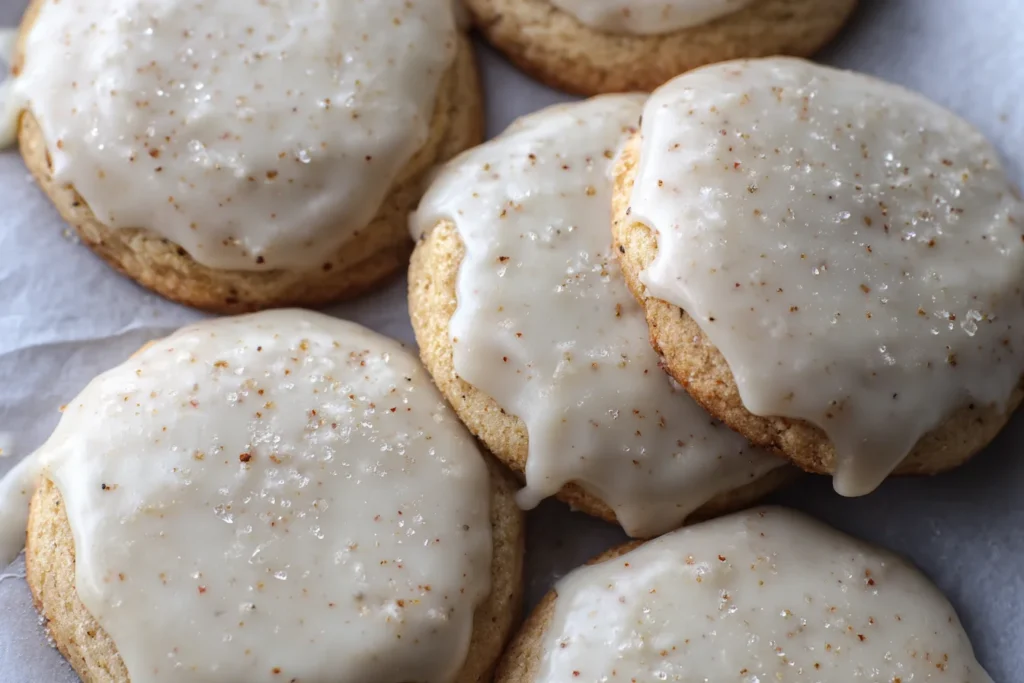
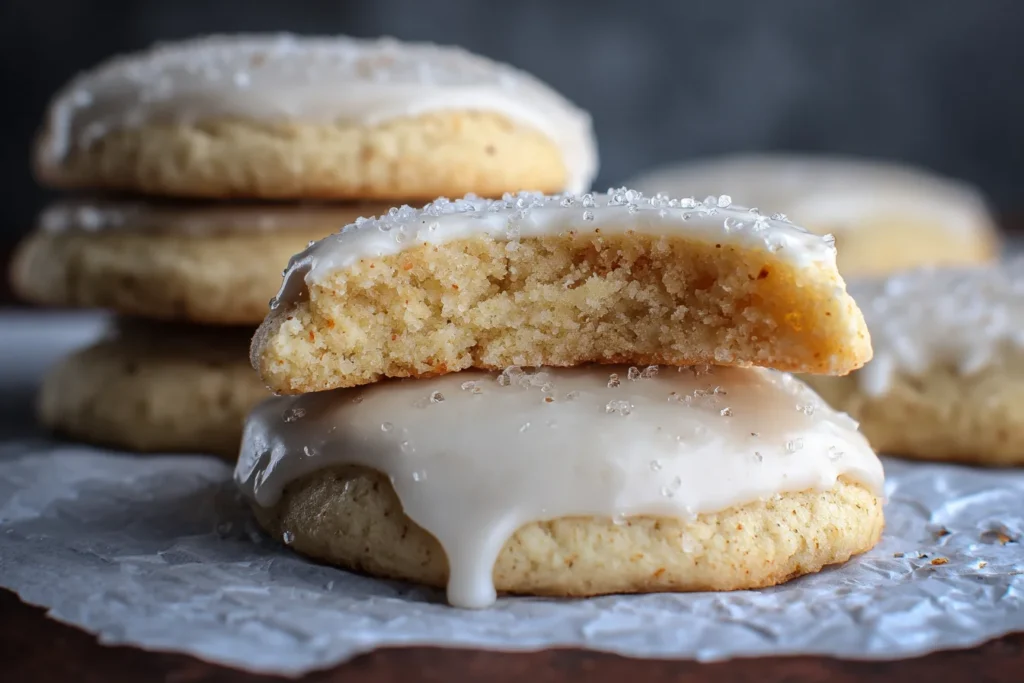
When the air turns crisp and the holiday lights begin to twinkle, there is one flavor that defines the season: eggnog. These Soft Eggnog Cookies are the culinary embodiment of a cozy night by the fireplace. Unlike crunchy holiday biscuits, these cookies boast a pillowy, melt-in-your-mouth texture that sits somewhere between a soft-baked snickerdoodle and a delicate tea cake. Infused with rich rum extract and freshly grated nutmeg, they deliver a sophisticated flavor profile that appeals to both children and adults. The pièce de résistance is the thick, creamy eggnog glaze that cascades over the domed tops, providing a sweet, spiced finish that sets beautifully. Whether you are a seasoned baker or looking for a new tradition, these cookies are destined to become the star of your holiday dessert table.
Why You’ll Love This Recipe
You will fall in love with these cookies because they bridge the gap between nostalgic comfort and gourmet elegance. The combination of cake flour and cornstarch creates a tender crumb that stays soft for days, solving the common problem of cookies turning rock-hard overnight. Furthermore, the dual-action of cream of tartar and baking soda provides that signature “tang” and lift familiar to snickerdoodle lovers but elevated with the creamy richness of real eggnog. They are incredibly versatile; you can serve them plain for a subtle treat or fully glazed for a decadent experience. Plus, the dough is freezer-friendly, making your holiday prep significantly easier during the busy December weeks.
What Is an Eggnog Cookie?
An Eggnog Cookie is essentially a holiday-themed “snickerdoodle” variant that incorporates the classic ingredients of the beloved festive beverage. While a standard cookie relies on vanilla for flavor, this recipe leans heavily into the trio of eggnog, nutmeg, and rum. The base dough uses a specific blending technique to ensure it is thick and holds its shape, while the traditional cinnamon-sugar coating of a snickerdoodle is replaced with a nutmeg-sugar mixture. This creates a fragrant, spiced exterior that complements the creamy, custard-like notes within the cookie itself. It is a modern Christmas classic that captures the essence of the drink without the need for a glass.
Ingredients Overview
To achieve the perfect Eggnog Cookie, the quality and type of ingredients are paramount. This recipe utilizes a blend of two sticks of unsalted butter and a mix of granulated and brown sugars. The brown sugar is vital for moisture, while the long creaming time (5 minutes!) ensures the sugars are fully aerated.
For the dry base, we use a specific ratio of all-purpose flour for structure and cake flour for tenderness. The addition of cornstarch is a secret baker’s weapon; it softens the proteins in the flour, resulting in a “melt-away” texture.
The flavor comes from store-bought old-fashioned eggnog, which adds fat and flavor, and a heavy hand of rum and vanilla extracts. Cream of tartar provides the necessary acidity to react with the baking soda, giving the cookies their characteristic cracked tops. Finally, ground nutmeg is used in three places: the dough, the coating, and the garnish, ensuring the holiday spice is present in every single layer of the bite.
Ingredient Substitutions & Tips
If you find yourself missing an ingredient, don’t worry. If you don’t have rum extract, you can substitute it with 1 tablespoon of actual dark rum or spiced rum, though the flavor will be slightly more subtle. No cake flour? You can make a DIY version by removing 2 tablespoons of all-purpose flour from a 1-cup measurement and replacing them with 2 tablespoons of cornstarch, then sifting it multiple times. For a dairy-free version, a thick oat-based eggnog and vegan butter sticks can work, though the texture may vary slightly. Lastly, ensure your eggs and butter are at room temperature to prevent the batter from curdling when you add the liquid eggnog.
Step-by-Step Instructions
- Creaming the Foundation: In your stand mixer equipped with a paddle attachment, combine the softened butter, 1 cup of granulated sugar, and 1/2 cup of brown sugar. Beat this on medium-high for a full 5 minutes. Do not rush this; the mixture should turn pale and look almost like frosting.
- Emulsifying the Liquids: Lower the speed and add the eggs one at a time. Pour in the 2 tablespoons of eggnog, vanilla extract, and rum extract. Turn the speed back to medium-high for another 2-3 minutes. The mixture should look very creamy and well-emulsified.
- The Sifting Method: Place a sifter over your mixing bowl. Add both flours, nutmeg, cream of tartar, baking soda, cornstarch, and salt. Sift them directly into the wet ingredients to eliminate any lumps of flour or soda.
- Final Mix: Turn the mixer to the lowest setting and mix until the dough just barely comes together. Over-mixing at this stage will lead to tough cookies.
- Coating and Chilling: Combine the 1/3 cup sugar and 1 teaspoon of nutmeg in a small bowl. Use a 2-ounce scoop to portion the dough, roll each ball in the nutmeg sugar, and place them on a parchment-lined sheet.
- The Chill Factor: Refrigerate the dough balls for at least 30 minutes. This prevents the cookies from spreading too thin in the oven.
- Baking: Preheat your oven to 375°F. Bake for 12 minutes. The tops should look dry and slightly cracked, but the centers should still look soft.
- The Glaze: Once the cookies have cooled on a wire rack for 30 minutes, whisk together the powdered sugar, eggnog, and rum extract. Dip each cookie, sprinkle with sanding sugar, and let set for 45 minutes.
Expert Baking Tips
The most important tip for this recipe is the 5-minute creaming rule. Most bakers stop once the butter and sugar are combined, but continuing to beat them introduces air bubbles that expand in the oven, creating that iconic domed shape. Secondly, use a sifter. Cake flour is notorious for clumping, and a sifter ensures those clumps don’t end up as white pockets in your finished cookie. Finally, temperature matters. If your kitchen is very warm, chill the cookie sheets before placing the dough on them to ensure the butter doesn’t start melting before it even hits the oven.
The Science of Cake Flour in Cookies
You might wonder why we use cake flour instead of just all-purpose. Cake flour has a lower protein content (usually around 7-8%) compared to all-purpose flour (10-12%). By blending the two, we are effectively controlling the gluten development. Less gluten means a more tender, “short” crumb. When combined with cornstarch, which further inhibits gluten, you get a cookie that is remarkably soft—almost like the top of a high-end muffin. This is the secret to getting that bakery-style texture that remains soft and chewy even three days after baking.
Serving Suggestions
These cookies are a natural pair for a steaming cup of coffee or a cold glass of real eggnog. For a festive platter, arrange them alongside ginger snaps and peppermint bark to provide a variety of colors and textures. They also make wonderful holiday gifts; once the glaze is fully set, they can be stacked in decorative tins with parchment paper between layers. If serving at a party, a light dusting of fresh orange zest over the wet glaze can add a bright, citrusy note.
Storage & Make-Ahead Tips
Store these cookies in an airtight container at room temperature for up to 4 days. If you need to keep them longer, they stay exceptionally fresh in the refrigerator for a week. To make them ahead of time, you can freeze the unbaked dough balls (after rolling in sugar) for up to 6 months. When ready to eat, simply bake them directly from the freezer, adding 1-2 minutes to the total bake time.
FAQs
Q: Can I use real rum instead of rum extract?
A: Yes! Use 1 tablespoon of dark or spiced rum in the dough and 1 teaspoon in the glaze. The flavor will be more subtle than the extract, but very delicious.
Q: Why did my cookies spread too much?
A: This usually happens if the butter was too warm or if the 30-minute chill time was skipped. Chilling the dough solidifies the fat, ensuring a slow, controlled spread.
Q: Do I have to use store-bought eggnog?
A: Homemade eggnog works too, as long as it is thick. If your eggnog is very thin or watery, the dough may require an extra tablespoon of all-purpose flour.
Q: Can I freeze the glazed cookies?
A: It is best to freeze the cookies without the glaze. While the glaze can be frozen, it may become slightly tacky or lose its sheen upon thawing.
Soft Eggnog Cookies Recipe
A holiday showstopper, these Eggnog Cookies are incredibly soft, thick, and infused with the warm spices of nutmeg and rum. They are finished with a rich eggnog glaze that sets beautifully for gifting.
- Prep Time: 45 minutes
- Cook Time: 12 minutes
- Total Time: 57 minutes
- Yield: 24 cookies
- Cuisine: American
Ingredients
Unsalted Butter – 2 sticks
Granulated Sugar – 1 cup
Brown Sugar – 1/2 cup
Large Eggs – 2
Store-bought Eggnog – 2 tbsp
Vanilla Extract – 1 tsp
Rum Extract – 1.5 tsp
Ground Nutmeg – 1 tsp
Cream of Tartar – 1.5 tsp
Baking Soda – 1/2 tsp
Cornstarch – 1 tbsp
Salt – 1/2 tsp
Cake Flour – 1 cup
All-Purpose Flour – 1.75 cups
Granulated Sugar (for coating) – 1/3 cup
Ground Nutmeg (for coating) – 1 tsp
Powdered Sugar (for glaze) – 2 cups
Eggnog (for glaze) – 5-6 tbsp
Rum Extract (for glaze) – 1/2 tsp
Sanding Sugar/Nutmeg – for garnish
Instructions
Cream butter and sugars in a stand mixer for 5 minutes until light and fluffy.
Add eggs, eggnog, vanilla, and rum extract. Beat on medium-high for 2-3 minutes.
Sift in the flours, nutmeg, cream of tartar, baking soda, cornstarch, and salt. Mix on low until dough forms.
In a small bowl, combine the 1/3 cup sugar and 1 tsp nutmeg.
Scoop 2-ounce portions of dough, roll in the sugar mixture, and place on a tray.
Refrigerate the dough balls for at least 30 minutes.
Bake at 375°F (190°C) for 12 minutes until edges are golden and tops are slightly cracked.
Cool on a wire rack for 30 minutes.
Whisk powdered sugar, eggnog, and rum extract for the glaze until it reaches a honey-like consistency.
Dip the tops of the cookies in the glaze, sprinkle with sanding sugar, and let set for 45 minutes.
Notes
• Ensure your butter is softened but not melted for the best rise.
• Don’t skip the sifting step; it ensures the cake flour is aerated and lump-free.
• If the glaze is too thin, add more powdered sugar; if too thick, add a teaspoon of eggnog.
• These can be made without the glaze for a classic ‘Eggnog Snickerdoodle’ experience.