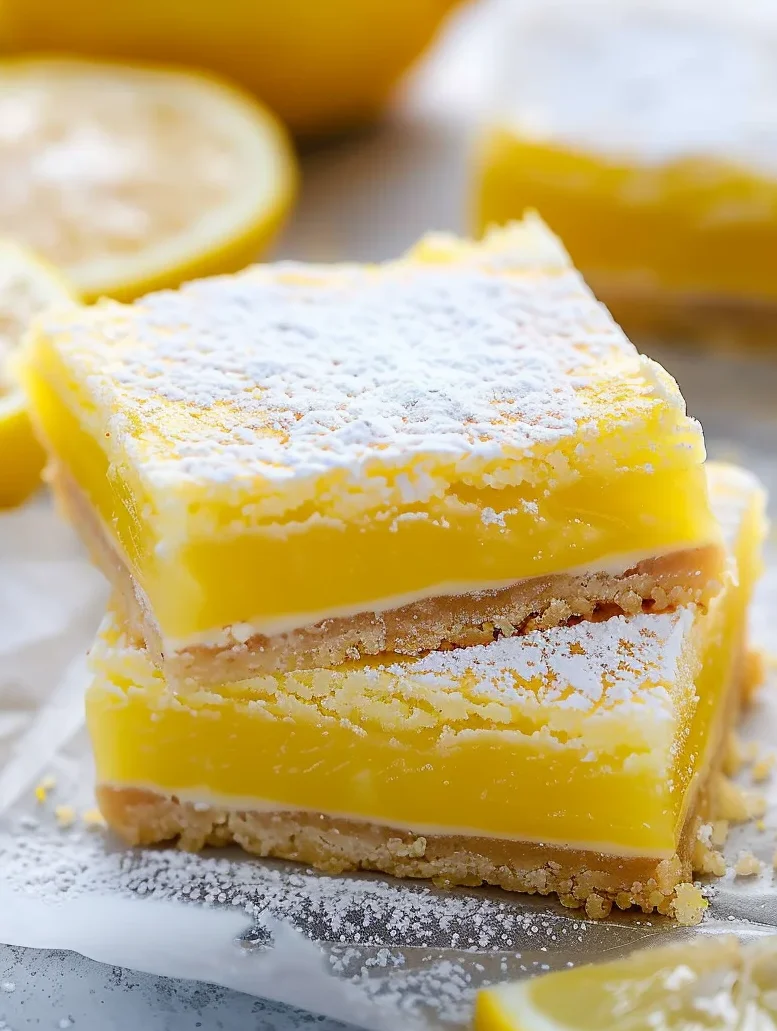
There is something inherently nostalgic about a tray of classic Lemon Bars. For me, they represent the transition from the chilly days of winter into the bright, sun-drenched afternoons of spring. With their vibrant yellow filling and snow-white dusting of powdered sugar, they are the undisputed royalty of the bake sale and the perfect conclusion to a backyard barbecue.
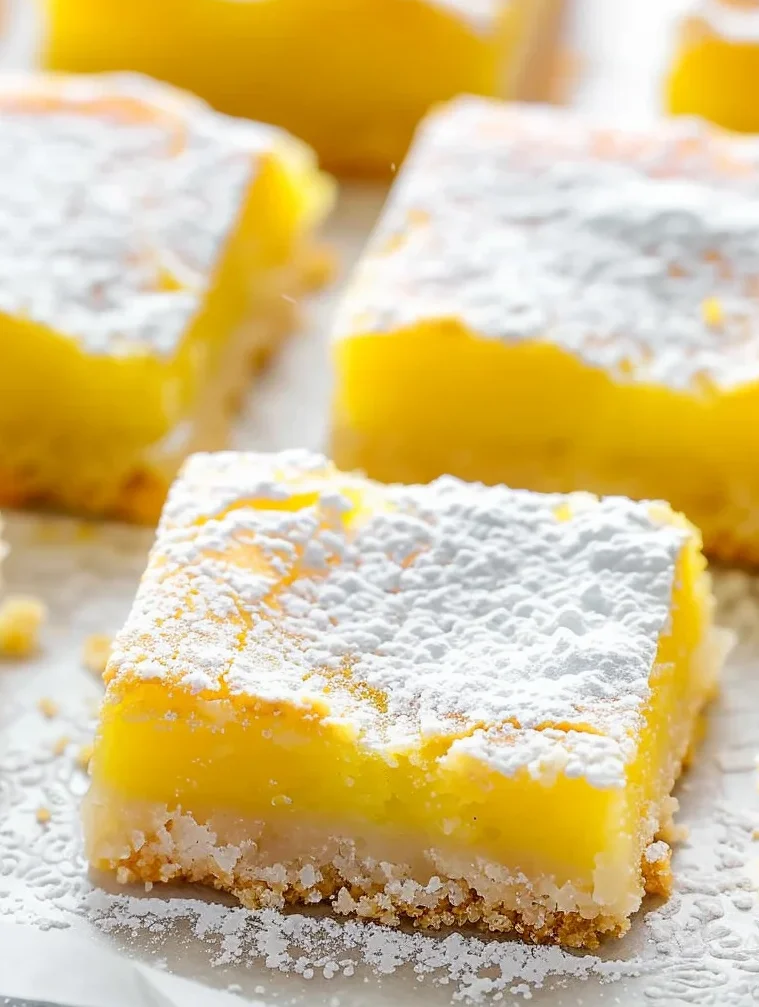
If you have been searching for a recipe that balances a puckering tartness with a buttery, melt-in-your-mouth base, look no further. This recipe uses just seven simple ingredients to create a dessert that tastes like it came straight from a high-end French patisserie, yet it is simple enough for a novice baker to master.
Why You’ll Love This Recipe
- 7 Simple Pantry Staples: You likely already have the butter, flour, sugar, and eggs in your kitchen right now.
- The Ultimate Texture Contrast: A thick, sturdy shortbread crust provides the perfect “crunch” to offset the silky-smooth lemon curd.
- Perfectly Balanced Flavor: Not too sweet, not too sour. It hits that “Goldilocks” zone of citrus perfection.
- Make-Ahead Friendly: These actually taste better after they’ve had time to set in the fridge, making them the ultimate stress-free hosting dessert.
- Customizable: Once you master the base recipe, you can easily swap the citrus or add mix-ins.
Ingredient Notes
The beauty of this recipe lies in its simplicity. Because there are so few ingredients, the quality of each one truly shines.
- Fresh Lemon Juice: This is the most important tip I can give you. Avoid the green plastic bottle of lemon juice at all costs! Freshly squeezed lemons contain natural oils and a brightness that bottled juice simply cannot replicate. You’ll need about 3 to 4 medium lemons to get 2/3 cup of juice.
- Unsalted Butter: Make sure your butter is “softened”—which means it should yield to a gentle press of your thumb but not be oily or melting. This ensures the shortbread crust has that signature sandy, tender crumb.
- Large Eggs: These provide the structure for the lemon curd. Ensure they are at room temperature so they incorporate smoothly with the sugar.
- All-Purpose Flour: This acts as the base for our crust and the thickening agent for our filling. Be sure to spoon and level your flour rather than scooping it directly with the measuring cup to avoid using too much.
Step-by-Step Instructions
1. Prepare the Crust
Start by preheating your oven to 350°F (175°C). I highly recommend lining your 9×9 inch baking dish with parchment paper, leaving a slight overhang on the sides. This “sling” makes it incredibly easy to lift the bars out of the pan later.
In a food processor, pulse the softened butter, 1/2 cup sugar, 2 cups flour, and salt. You’re looking for a crumbly texture. If you don’t have a food processor, you can use a pastry cutter or even your fingers to work the butter into the dry ingredients. Once ready, press the dough firmly into the bottom of your pan in an even layer. Bake for 15-18 minutes until the edges just start to turn a pale golden brown.
2. Mix the Filling
While the crust is baking, prepare your lemon filling. In a large mixing bowl, whisk the eggs and 1 1/2 cups of sugar until well combined. Gradually whisk in the 1/4 cup of flour, ensuring there are no lumps. Finally, stir in that beautiful fresh lemon juice.
3. The Second Bake
Once the crust has cooled for about 15 minutes, pour the lemon mixture directly over it. Return the pan to the oven and bake for another 30 minutes. You’ll know it’s done when the top is set and doesn’t jiggle excessively when you move the pan.
4. The “Big Chill”
This is the hardest part: waiting! Let the bars cool in the pan at room temperature for an hour. Then, cover them and refrigerate for at least 2 hours (though overnight is even better). This chilling time is what allows the curd to set so you can get those sharp, clean edges when slicing.
Expert Tips for Best Results
- Don’t Overbake the Crust: If the crust gets too dark during the first bake, it will become hard and difficult to cut. Aim for a light golden hue.
- Sift Your Powdered Sugar: For that picture-perfect finish, use a fine-mesh sieve to dust the powdered sugar over the bars just before serving. If you do it too early, the sugar will dissolve into the moist lemon layer.
- Clean Slices: To get those professional-looking squares, wipe your knife with a warm, damp cloth between every single cut.
- Avoid Metallic Pans: If possible, use a glass or ceramic baking dish. The acid in the lemon juice can sometimes react with unlined aluminum pans, giving the bars a slight metallic aftertaste.
Variations and Substitutions
- Meyer Lemons: If you prefer a sweeter, more floral citrus flavor, use Meyer lemons. You might want to reduce the sugar in the filling by 2 tablespoons since Meyer lemons are less acidic than standard Lisbons or Eurekas.
- Lavender Lemon Bars: Add 1 teaspoon of dried culinary lavender to the shortbread crust for a sophisticated, herbal twist.
- Lime or Grapefruit: You can follow this exact ratio using lime juice (for “Key Lime Bars”) or grapefruit juice for a pink, tart variation.
- Gluten-Free: Swap the all-purpose flour for a high-quality 1:1 gluten-free flour blend. The shortbread texture remains remarkably similar!
Storage and Freezing
In the Refrigerator: Store your lemon bars in an airtight container in the fridge for up to 4 days. Keep the parchment paper between layers if you are stacking them to prevent sticking.
In the Freezer: These bars freeze surprisingly well! Wrap individual squares tightly in plastic wrap and store them in a freezer-safe bag for up to 3 months. Thaw them in the refrigerator for a few hours before serving. Wait to dust with powdered sugar until they are fully thawed.
FAQ
Why are my lemon bars runny?
This usually happens if they haven’t been baked long enough or if they haven’t chilled properly. The curd needs time to set. If they are still runny after chilling, you may need to add an extra tablespoon of flour to the filling next time.
Can I use bottled lemon juice?
Technically yes, but I don’t recommend it. Bottled juice is pasteurized and often contains preservatives that dull the flavor. For the best “wow” factor, stick to fresh.
Do I need to grease the pan?
If you are using parchment paper, you don’t necessarily need to grease the pan, but a quick spray of non-stick oil can help the parchment stay in place while you’re pressing in the crust.
My filling has little white bits in it—what happened?
Those are likely “cooked” egg whites. To avoid this, make sure you whisk your eggs and sugar very thoroughly before adding the other ingredients. You can also strain the filling through a fine-mesh sieve before pouring it over the crust to ensure total smoothness.
A Sunny Treat for Any Occasion
These lemon bars are more than just a dessert; they are a bit of edible sunshine. Whether you’re hosting a baby shower, bringing a treat to a neighbor, or just craving something bright after dinner, this recipe never fails to deliver. The combination of the rich, buttery base and the zingy citrus top is a timeless pairing that appeals to kids and adults alike.
Give this recipe a try this weekend, and don’t forget to tag me in your photos—I love seeing your bakes!
PrintEasy Lemon Bars with a Buttery Shortbread Crust

These classic Lemon Bars are the perfect balance of tart and sweet, featuring a thick, buttery shortbread crust and a silky smooth lemon curd topping.
- Prep Time: 15
- Cook Time: 45
- Total Time: 60
- Yield: 16 bars
- Category: Dessert
- Method: Baking
- Cuisine: American
Ingredients
FOR THE CRUST:
2 sticks (1 cup) butter, softened
1/2 cup sugar
2 cups flour
1/4 tsp salt
FOR THE FILLING:
4 large eggs
1 1/2 cups sugar
1/4 cup flour
2/3 cups lemon juice (fresh squeezed)
Instructions
1. Preheat oven to 350°F (175°C). Line a 9×9 inch baking dish with parchment paper.
2. In a food processor, process the crust ingredients (butter, sugar, flour, salt) until fine crumbs form. Press firmly into the bottom of the prepared dish.
3. Bake crust for 15-18 minutes until edges are lightly golden. Let cool for 15 minutes.
4. While the crust cools, whisk together eggs and sugar in a large bowl. Add flour and whisk until no lumps remain. Stir in fresh lemon juice.
5. Pour the lemon mixture over the warm crust and return to the oven.
6. Bake for 30 minutes or until the center is set.
7. Let cool at room temperature for 1 hour, then refrigerate for at least 2 hours.
8. Lift from the pan using the parchment paper, slice into squares, and dust with powdered sugar.
Notes
Use fresh lemons for the best flavor—bottled juice can be too metallic.
Ensure your butter is truly softened to room temperature for the crust.
Chill time is essential for clean slices.