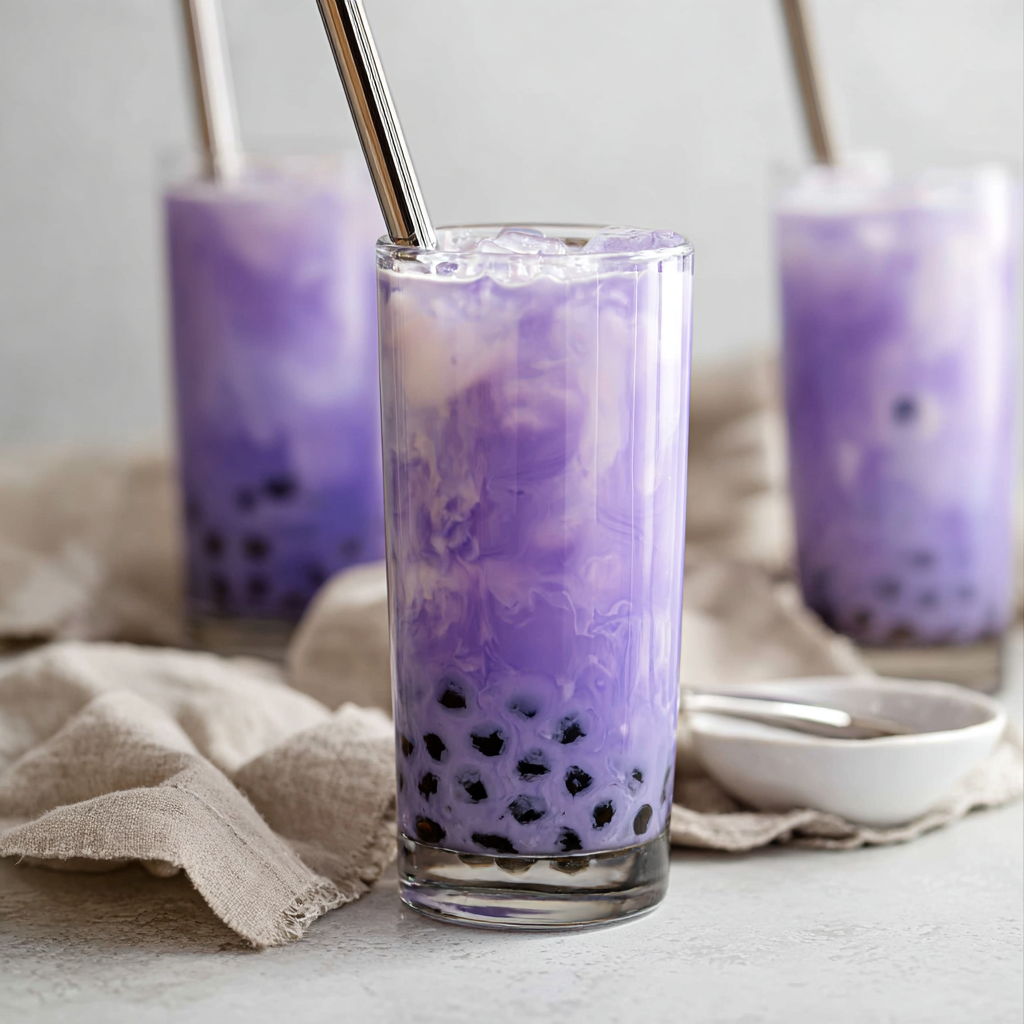
If you’ve ever walked past a boba shop and seen a drink with a mesmerizing, vibrant purple hue, you’ve likely encountered the magic of Ube Milk Tea. This drink isn’t just a feast for the eyes; it is a creamy, dreamy experience that combines the nutty sweetness of Filipino purple yam with the playful texture of chewy tapioca pearls. While many cafes rely on artificial powders and syrups, there is nothing quite like the flavor of a homemade version made with real ingredients. In this guide, I will show you how to craft a professional-grade Ube Milk Tea right in your own kitchen. Whether you are a boba aficionado or a newcomer to the world of ube, this recipe delivers a rich, authentic taste that far surpasses anything you can buy at a mall kiosk.
Why You’ll Love This Recipe
You are going to fall in love with this recipe because it prioritizes authenticity and texture. Unlike powdered mixes that can taste overly floral or chemical, this recipe uses real frozen ube and coconut milk to create a “base” that is thick, velvety, and deeply flavored. It is also incredibly customizable; you can control the sugar levels, choose your preferred type of milk, and even adjust the intensity of the purple color. Plus, making the ube base in a large batch means you can enjoy “boba shop quality” drinks all week long for a fraction of the price. The visual appeal—those signature purple streaks against the glass—makes it the perfect treat to impress friends or share on social media.
What Is Ube Milk Tea?
Ube Milk Tea is a popular variation of bubble tea (or boba) that features ube, a purple yam native to the Philippines. It is often confused with Taro Milk Tea, but the two are distinct. While taro has an earthy, almost potato-like flavor with a hint of vanilla, ube is naturally sweeter and possesses a flavor profile often described as a cross between white chocolate, vanilla, and pistachio. In milk tea form, the ube is usually prepared as a jam-like paste or a concentrated syrup, which is then shaken or blended with milk and served over ice with chewy tapioca pearls. It is a staple of Filipino dessert culture that has taken the global beverage world by storm.
Ingredients
To achieve the best results, selecting the right ingredients is paramount. The heart of this recipe is the 226g of frozen ube. You can typically find this in the freezer section of Asian markets, usually already grated. Avoid using fresh ube unless you are prepared for a much longer boiling and mashing process; frozen ube is a fantastic shortcut that retains all the natural flavor.
Next is the coconut milk. For this recipe, use full-fat canned coconut milk rather than the thin version found in cartons. The fat content in the canned milk provides the necessary richness to the ube base. The ube extract is another essential component; while we use real yam, the extract provides that iconic “electric” purple color and boosts the floral aroma. For the drink assembly, you’ll need quick-cook tapioca pearls. These are convenient for home use as they soften in minutes. Finally, evaporated milk or a high-quality whole milk adds the finishing creamy touch that balances the starchiness of the yam.
Ingredient Substitutions & Tips
If you cannot find frozen ube, you can substitute it with Ube Halaya (ube jam), which is sold in jars. However, since Halaya is already sweetened, you should reduce the added sugar in the recipe by half. For those who are dairy-free, this recipe is incredibly adaptable. Replace the evaporated milk and chilled milk with oat milk or extra coconut milk. Oat milk is particularly good here because its natural creaminess complements the ube’s nuttiness. If you want a lower glycemic index, you can swap the granulated sugar for coconut sugar, though this will slightly darken the vibrant purple color to a more muted plum tone.
Step-by-Step Instructions
1. Prepare the Ube Base
Begin by placing the thawed ube, coconut milk, sugar, and vanilla extract into a medium saucepan. Set the heat to medium-high and bring the mixture to a gentle boil. Once boiling, reduce the heat to low. This is the most critical stage: you must stir frequently with a silicone spatula to prevent the yam from sticking to the bottom and burning. Continue cooking until the mixture thickens significantly. You’ll know it’s ready when you can draw a line through the mixture with your spatula and the trail remains visible for a second before closing.
2. Flavor and Adjust
Once thickened, remove from heat and stir in the ube extract. This will instantly transform the mixture into a deep, beautiful purple. To make the base workable for drinks, stir in about ½ cup of evaporated milk. The goal is a “thick but pourable” consistency, similar to a warm caramel sauce. If it’s still too stiff, add a splash more milk. Transfer this to a jar and let it cool.
3. Prepare the Boba
Cook your tapioca pearls according to the package instructions. A pro tip: once drained, let them sit in a small bowl of warm water with a tablespoon of honey. This prevents them from clumping together and keeps them sweet and “bouncy” while you prepare the rest of the drink.
4. Blend and Assemble
In a blender, combine ½ cup of your cooled ube base, 2 cups of chilled milk, and a handful of ice. Blend on high until the mixture is uniform and frothy. To serve, take a spoon and “paint” some of the thick ube base onto the inside walls of your glasses to create artistic streaks. Divide the boba pearls between the glasses, pour the blended ube milk over them, and serve with a wide straw.
Expert Baking/Cooking Tips
For the ultimate ube experience, temperature management is key. When making the ube base, never leave the stove. The high starch content in the yam means it can scorch in seconds, which will ruin the delicate vanilla flavor. Another expert tip involves the boba: never refrigerate cooked tapioca pearls. Cold temperatures cause the starch to undergo retrogradation, making the pearls hard and chalky. Always cook your boba fresh for each serving. Finally, if you want that “Instagrammable” look, ensure your ube base is slightly chilled before painting the glass; if it’s too hot, it will simply slide to the bottom instead of creating those beautiful purple clouds.
Customizing Your Ube Milk Tea
Once you have mastered the basic recipe, you can get creative with toppings and variations. A popular trend is the Cheese Foam topper, a salty-sweet cream cheese whip that cuts through the richness of the ube. You can also try making an Ube Float by adding a scoop of ube ice cream on top instead of blending all the ice. For a texture contrast, some enthusiasts prefer adding Crystal Boba or Lychee Jelly alongside the traditional pearls. If you prefer a stronger “tea” flavor, you can steep a bag of jasmine or black tea in the milk before blending it with the ube base.
Serving Suggestions
Ube Milk Tea is best served in a tall, clear glass to showcase the vibrant color and the boba at the bottom. It is a hearty drink, often treated as a liquid dessert. To make it a full Filipino merienda (snack time), serve it alongside Pandesal (bread rolls) or a slice of Bibingka (coconut rice cake). Because it is caffeine-free (unless you add tea), it is a fantastic treat for children or for an evening indulgence.
Storage & Make-Ahead Tips
The ube base is the perfect make-ahead component. It can be stored in an airtight glass jar in the refrigerator for up to 5 days. If it firms up too much in the fridge, simply microwave a portion for 10-15 seconds to restore its spreadable consistency. The assembled drink, however, should be consumed immediately. Tapioca pearls lose their ideal texture after about 4 hours, so only cook as many as you plan to eat in one sitting.
FAQs
Is Ube Milk Tea caffeine-free?
Yes, this specific recipe is caffeine-free as it uses ube and milk as the primary components. However, if you choose to steep black or green tea into the milk before blending, it will contain caffeine.
Can I use ube powder instead of frozen ube?
You can, but the texture will be significantly thinner and the flavor less complex. If using powder, whisk it into the milk thoroughly to avoid clumps.
Why is my ube tea gray instead of purple?
Natural ube can sometimes have a muted color depending on the crop. The addition of ube extract (like the McCormick brand) is the secret used by professional shops to achieve that bright purple color.
Where do I buy boba straws?
Large-diameter boba straws are available at most Asian grocery stores or through online retailers. They are essential for being able to suck up the pearls!
Can I make this hot?
Absolutely! Simply whisk the ube base into steamed milk instead of blending it with ice. It makes for a comforting, warm purple yam latte.
Making Ube Milk Tea at home is a rewarding process that brings a piece of Filipino flavor right to your kitchen. By using real ube and crafting your own base, you ensure a quality and depth of flavor that commercial powders simply cannot match. It’s a versatile, beautiful, and delicious drink that satisfies your sweet tooth while offering a unique nutty profile. Give this recipe a try, and you may never find yourself waiting in a boba line again!
PrintUbe Milk Tea (Ube Bubble Tea) Recipe
A stunning, vibrant purple ube milk tea made from scratch using real Filipino purple yam. This recipe creates a rich, velvety ube base that is far superior to powdered mixes.
- Prep Time: 15 minutes
- Cook Time: 20 minutes
- Total Time: 35 minutes
- Yield: 2 drinks
- Cuisine: Filipino
Ingredients
Frozen ube, thawed – 226 g
Canned coconut milk – 1 cup
Granulated sugar – ½ cup
Vanilla extract – 1 tbsp
Ube extract – 1 tbsp
Evaporated milk (or whole milk) – ½ cup
Quick cook tapioca pearls – ½ cup
Chilled milk (dairy or plant-based) – 2 cups
Ice cubes – 1 handful
Honey (optional) – 1 tbsp
Instructions
Combine thawed ube, coconut milk, sugar, and vanilla in a saucepan over medium heat.
Bring to a boil, then reduce heat and stir frequently until the mixture thickens and leaves a trail when stirred.
Stir in the ube extract for color and aroma.
Add evaporated milk to reach a thick but pourable consistency; heat for 2 minutes then cool.
Prepare tapioca pearls according to package instructions and coat with honey if desired.
In a blender, combine ½ cup of the prepared ube base, chilled milk, and ice.
Blend until smooth and frothy.
Spread a little extra ube base on the inside of two glasses for decorative streaks.
Add pearls to the glasses, pour in the blended ube milk, and serve immediately.
Notes
• If the ube base is too thick after refrigerating, microwave it for 10 seconds to make it spreadable.
• For a vegan version, use oat milk and coconut-based evaporated milk.
• Store leftover ube base in a sealed jar in the fridge for up to 5 days.